
 "/>
"/>
"/>
"/>


“如果说「新作」考验想象力,那么「修复」考验理解力与克制力。这是对于weico一次极有意义的建筑实践。”
“If new construction tests imagination, renovation tests understanding and restraint. This project stands as a particularly meaningful architectural practice for weico.”
可胜科技和可利科技曾经是苏州工业园区内的两大台资企业,它们在本世纪初在苏州投资建设了约41万平方米的生产园区和约10.7万平方米的宿舍区。该项目当年由大邦建设担任设计顾问,投入使用后一度能够容纳约12,000名工人的住宿与生活。但自从2015年可胜科技与可利科技整体搬迁至宿迁后,宿舍区也变成了周边企业共用的大杂院,建筑环境日渐衰败,与时代严重脱节,远远无法满足当今社会务工人员的生活要求。
Topo & Meeca Technology were once two major Taiwanese-invested manufacturers in Suzhou Industrial Park. In the early 2000s, they developed approximately 410,000 square meters of production facilities together with about 107,000 square meters of dormitory buildings. With Dabond Construction acting as the design consultant, the complex once supported the daily life and accommodation of nearly 12,000 workers. Following the relocation of both companies to Suqian in 2015, the dormitory area gradually lost its original organizational structure and became an informally shared compound for surrounding enterprises. Over time, the architectural environment deteriorated, falling out of step with contemporary standards and no longer capable of meeting the living expectations of today’s workforce.
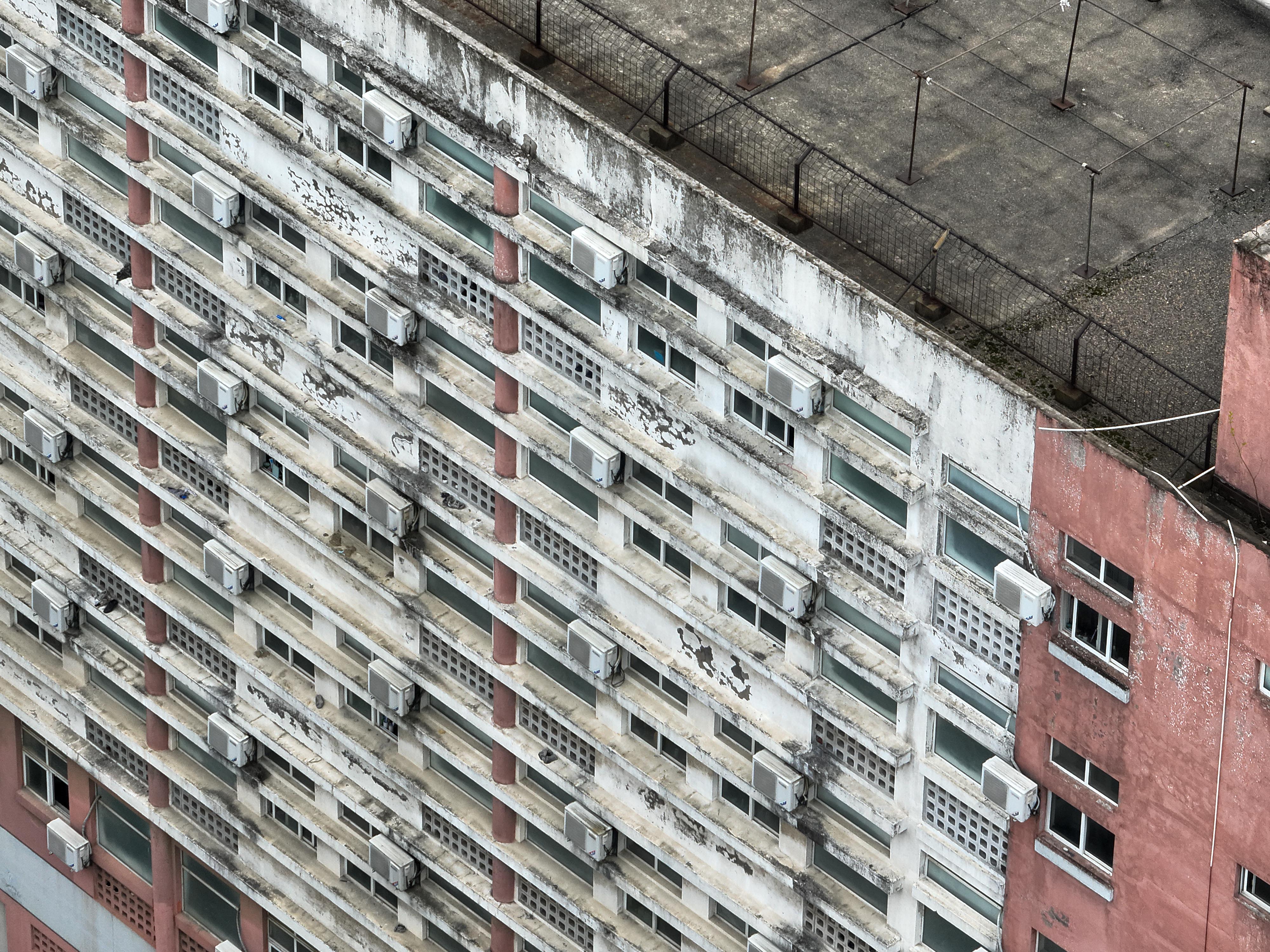
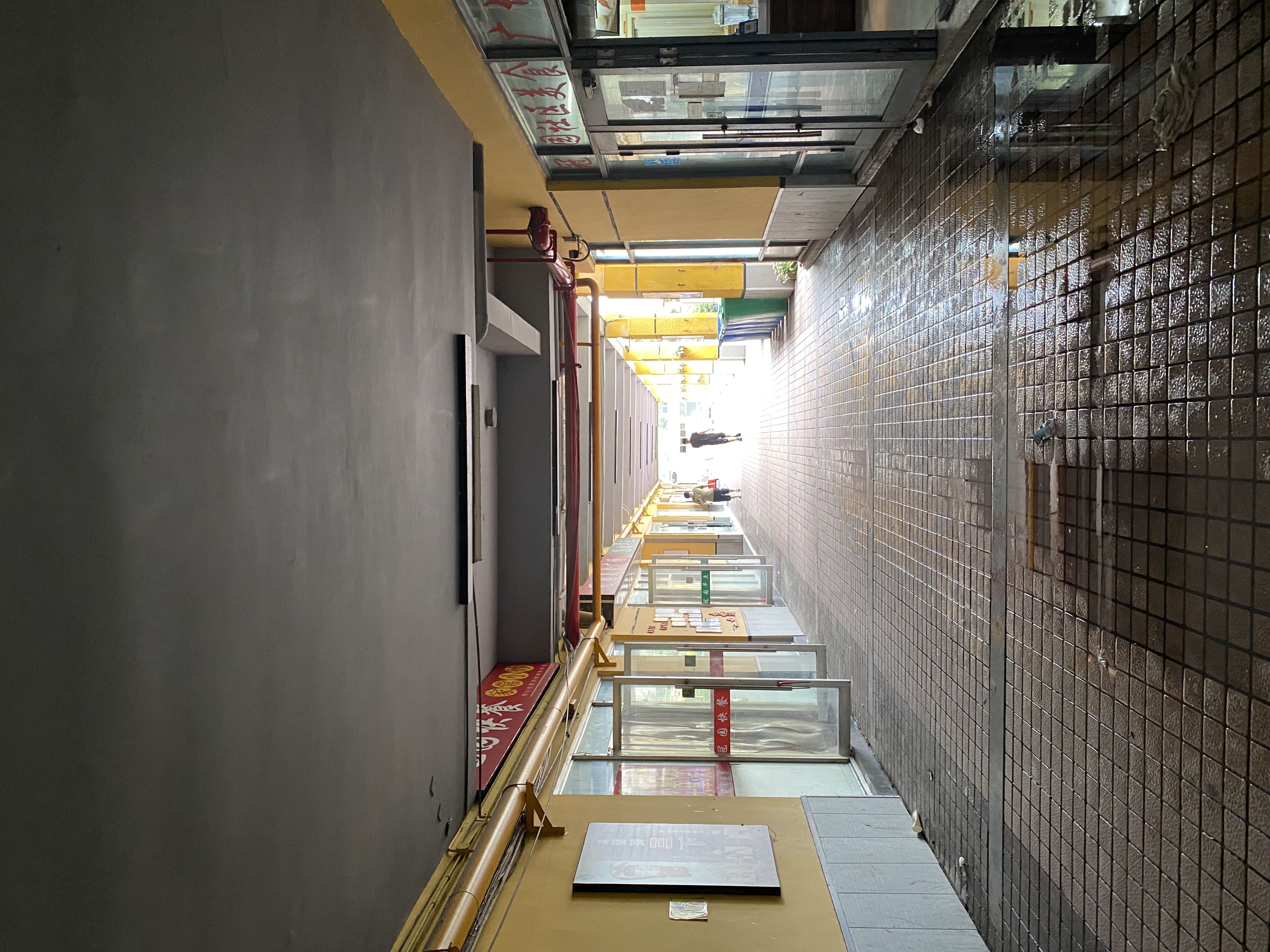
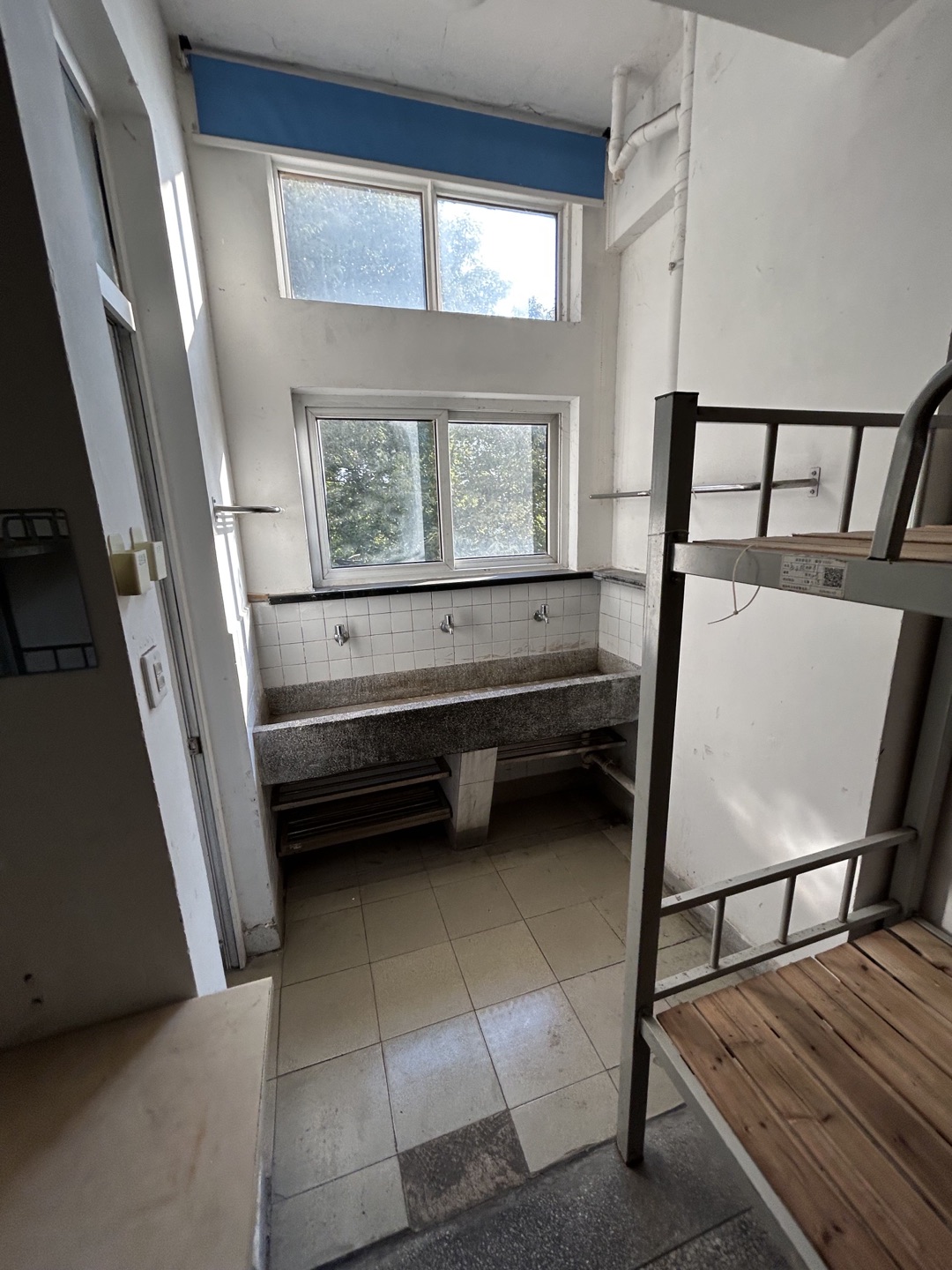
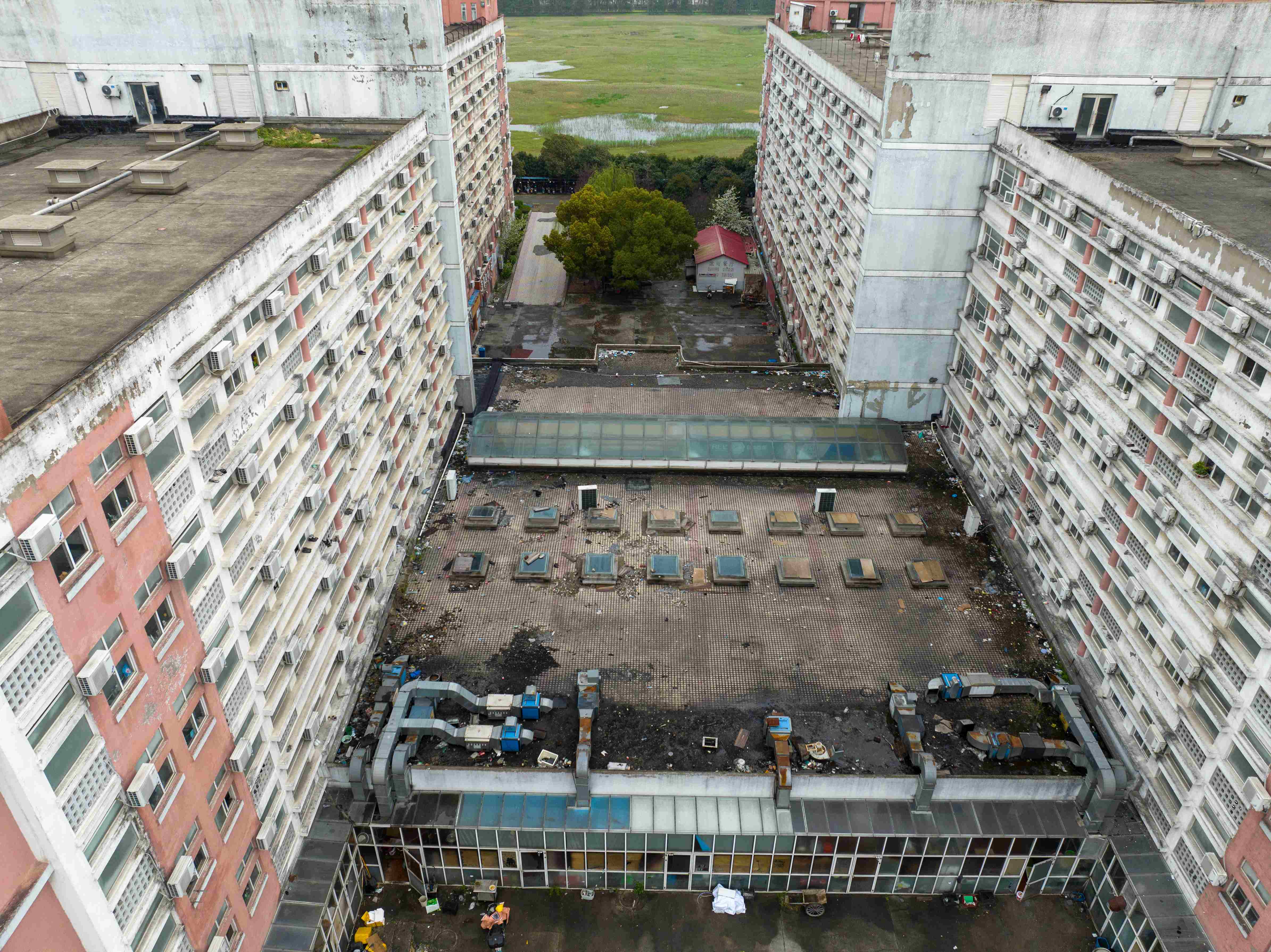
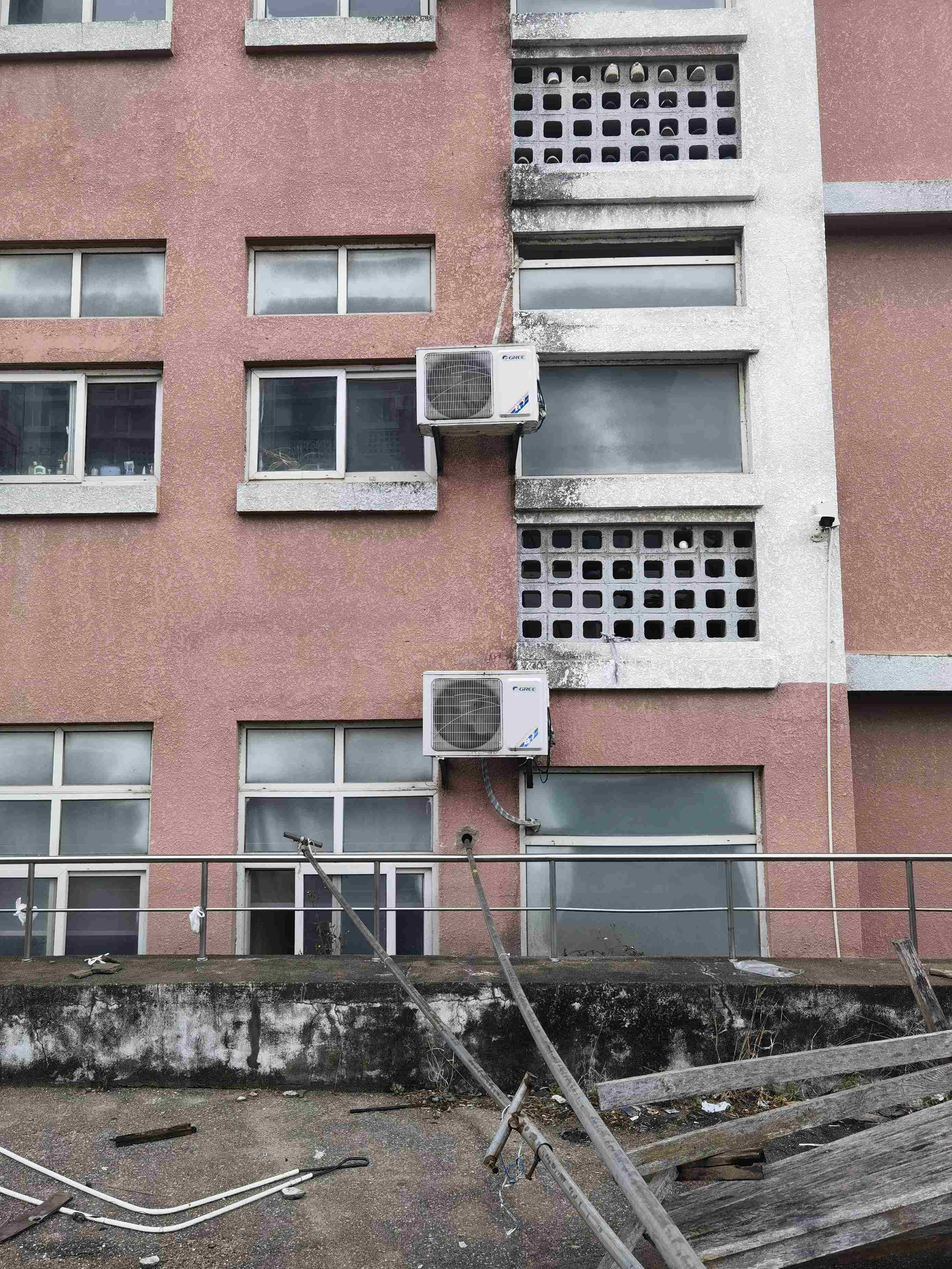
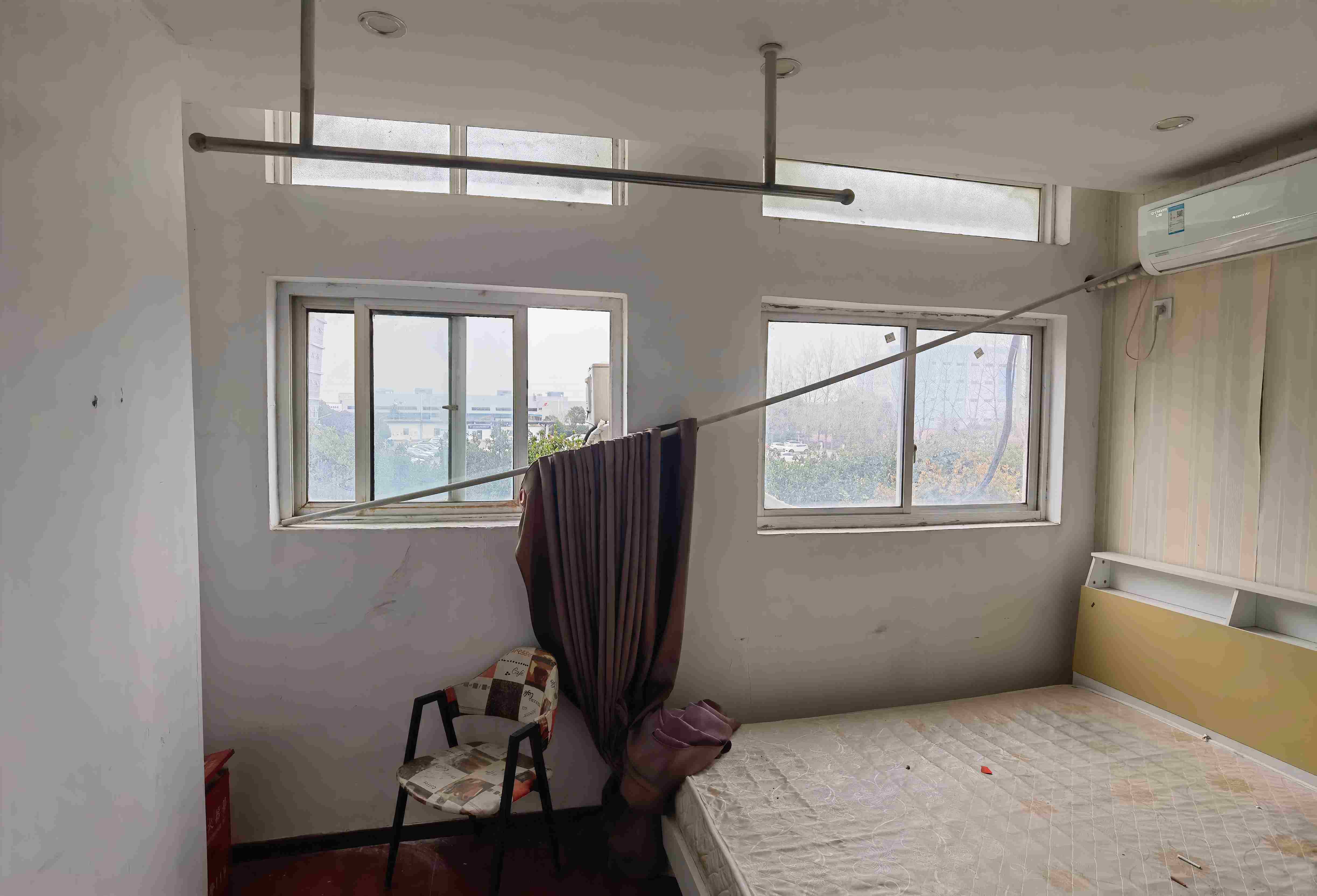
建筑修葺前(组图) ©苏州工业园区城市重建有限公司 ©weico
Pre-Renovation Conditions (Gallery)
该项目虽然是普通的工人宿舍,但作为苏州工业园区建设的典型片断,具有历史标本的意义。这个破旧的建筑群同时拥有强烈的建筑学特征,需要对它的建筑身份进行保留,并在功能与技术层面进行更新,以适应当下的使用需求。
Although originally conceived as ordinary worker dormitories, the project represents a typical fragment of the early development of Suzhou Industrial Park and carries the value of a historical reference. Despite its deteriorated condition, the building cluster retains a strong architectural character. Its identity therefore needed to be preserved, while its functions and technical systems were upgraded to respond to contemporary modes of use.
从2024年至2025年,weico协助苏州工业园区重建公司完成了可胜可利工人宿舍区的修复与活化,园区风貌整饬一新,成功转身成为新盛里低空经济产业园的配套公寓,开始迎接数千名新的住客,迎来数十年使用之后的第二个春天。
From 2024 to 2025, weico collaborated with Suzhou Industrial Park Reconstruction and Development Co. to complete the renovation and activation of the Topo & Meeca Technology Workers’ Dormitory. The renewed complex has been transformed into supporting apartments for the Xinshengli Low-Altitude Economy Industrial Park, welcoming thousands of new residents and ushering in a second life after decades of use.
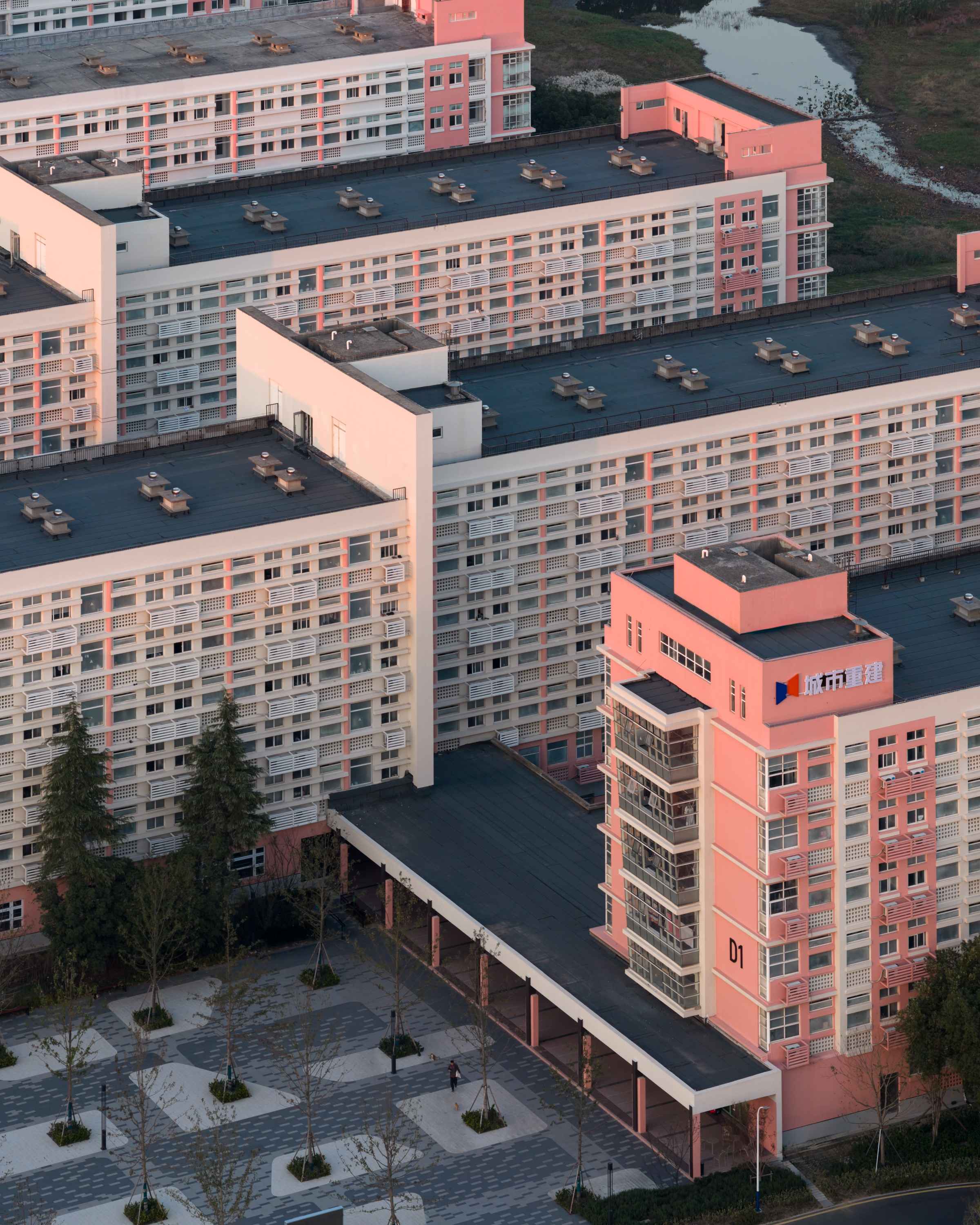
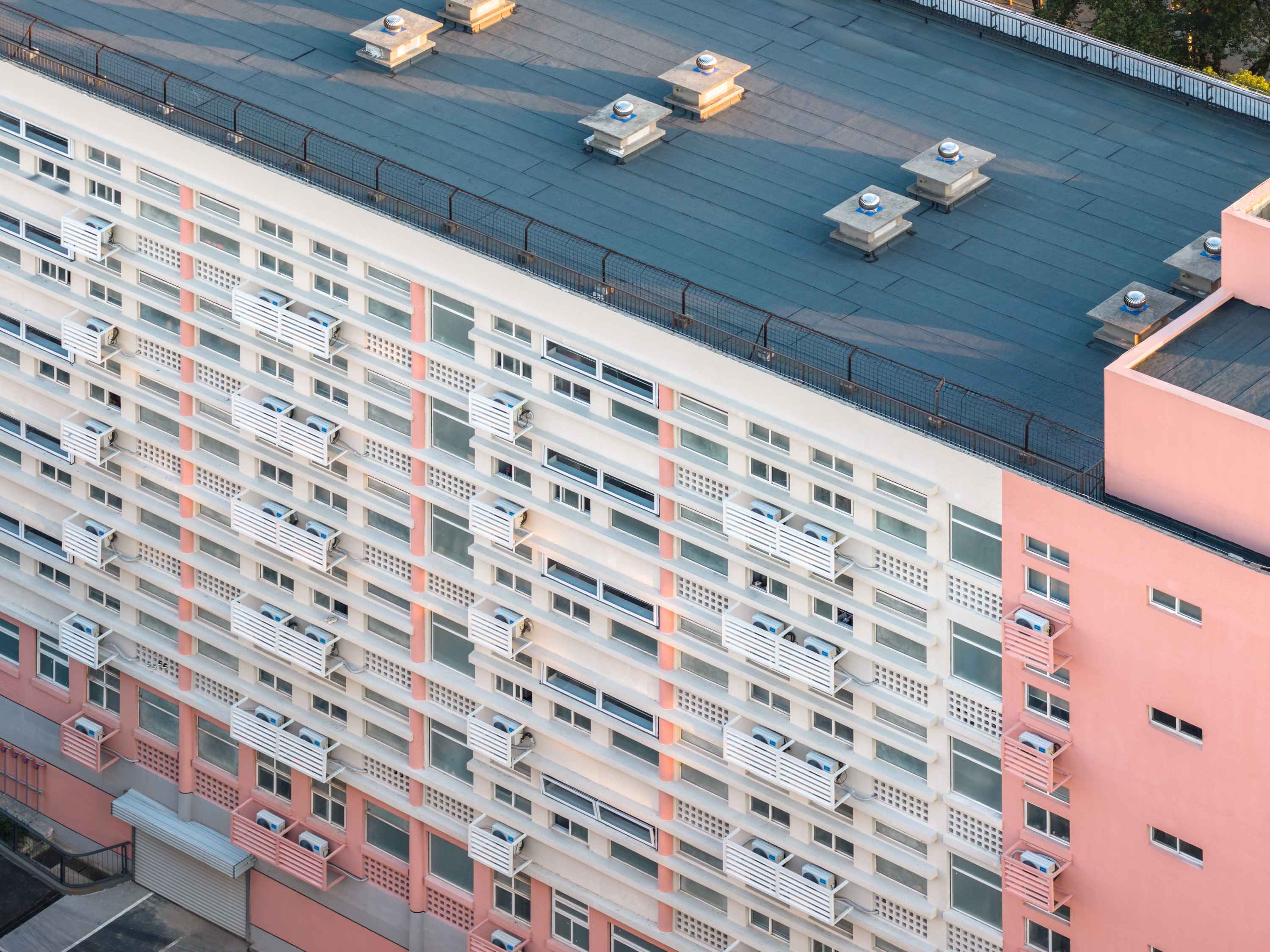
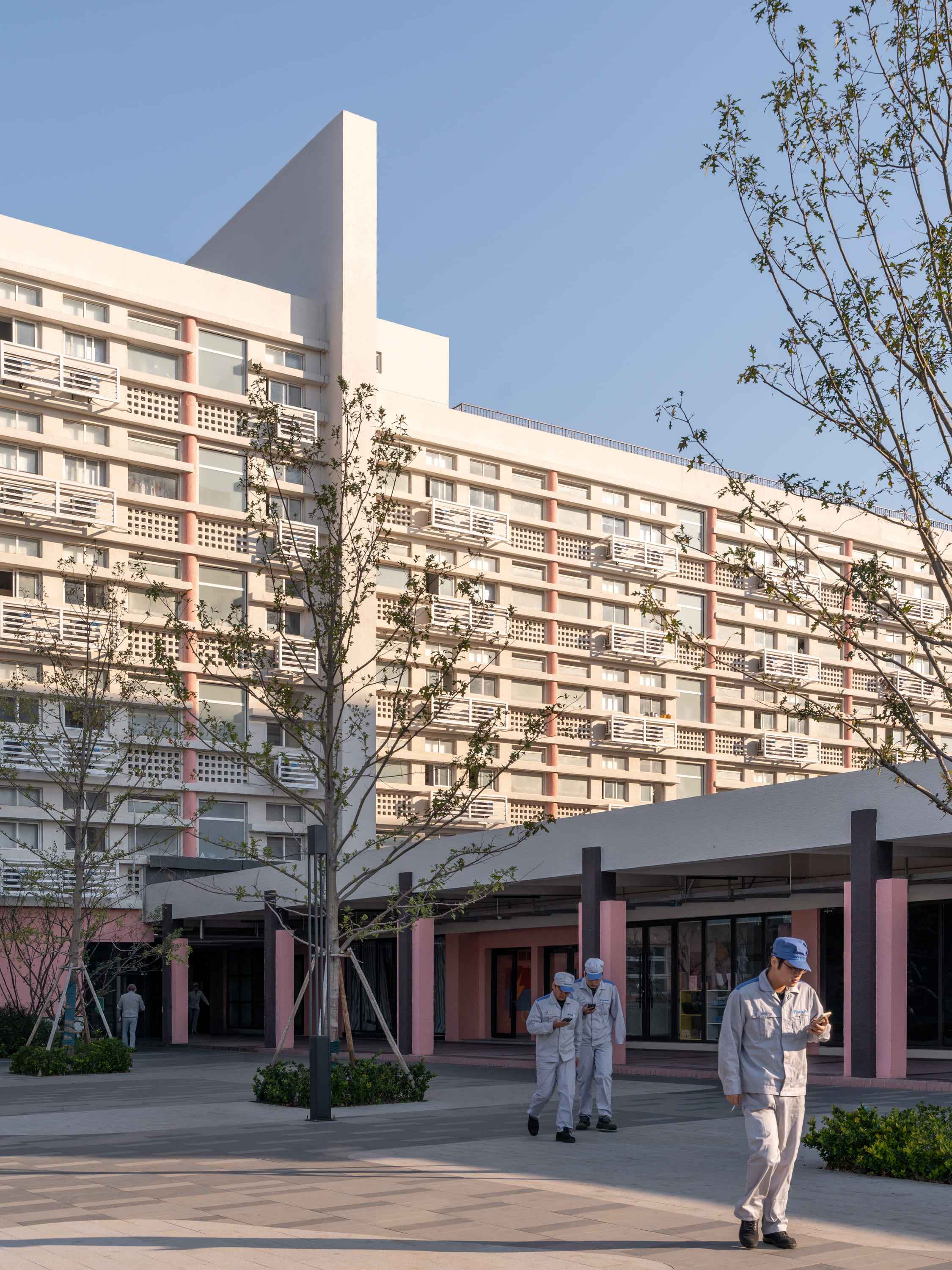
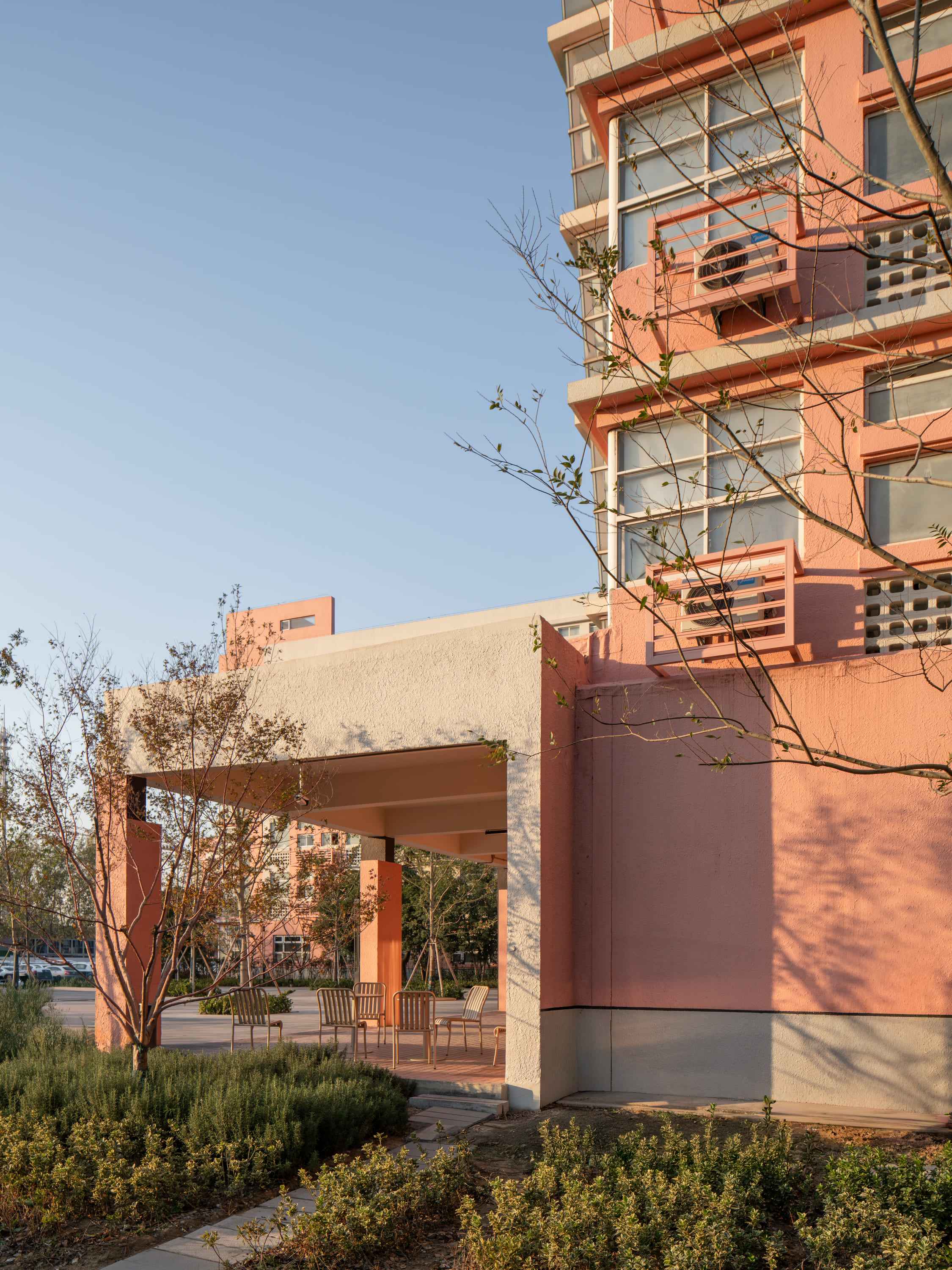
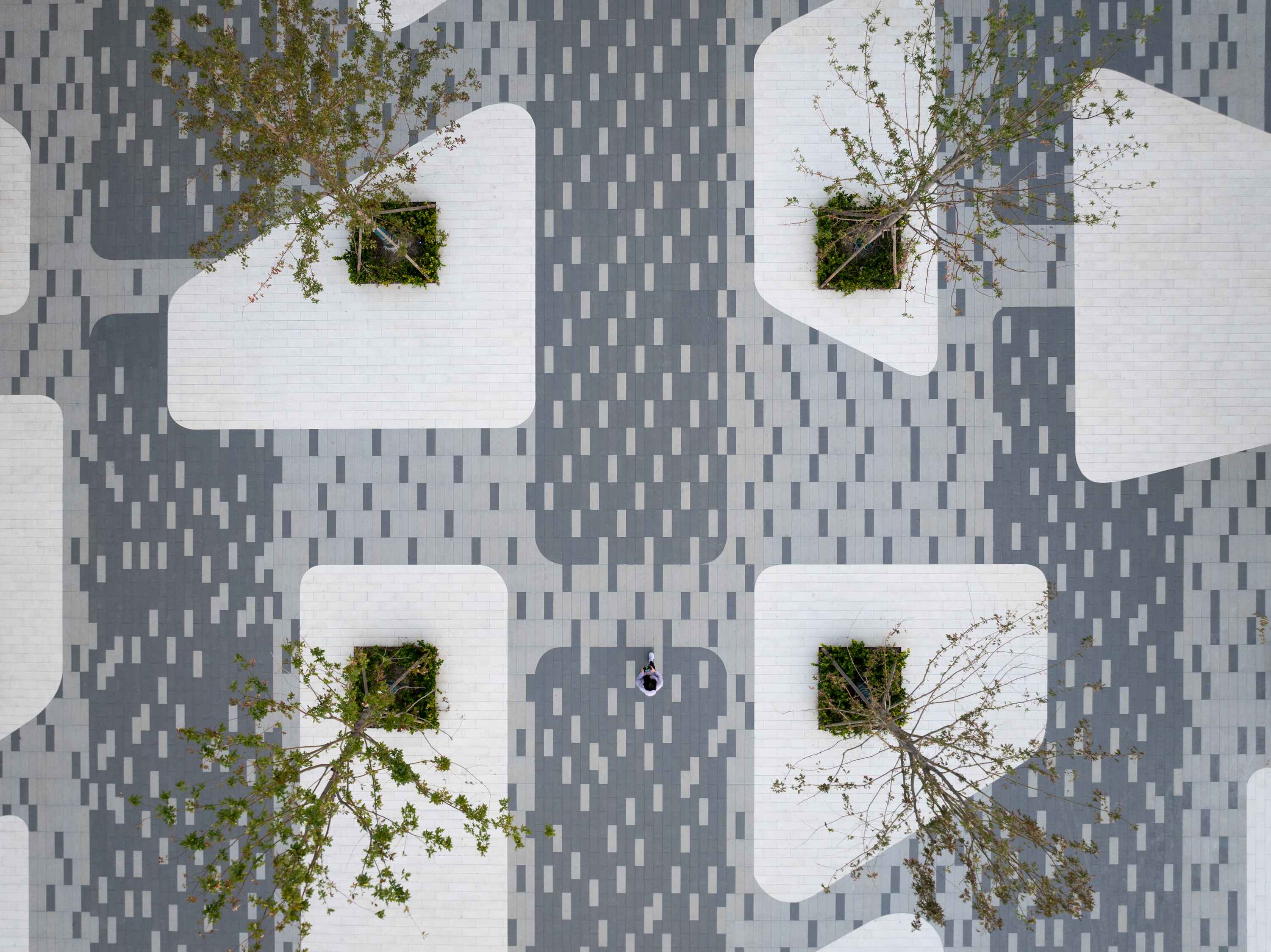
建筑修葺后(组图) ©陈曦工作室
Post-Renovation Conditions (Gallery)
园区内的建筑设计风格明显倾向于现代主义,但在具体细节上带有特定的地域性诠释。建筑主要由简洁的长方体构成,立面网格化的窗户和阳台体现了理性的秩序和标准化设计,没有冗余的装饰。裸露的混凝土结构(例如楼梯的基础和悬挑的门廊)强调了结构本身的表现力。在我们介入之前,立面尽管已经破旧不堪,但仍能看出原本大面积被使用的柔和的粉色涂料,这与经典的、通常采用白色或灰色的现代主义风格不同,带有一些战后后现代主义时期对色彩回归的探索,我们在今天俄罗斯南部的克拉斯诺达尔能看到几乎一致的建筑形式和色彩运用。
The architectural language of the complex clearly leans toward Modernism, yet its details reveal a specific regional interpretation. The buildings are primarily composed of simple rectangular volumes, with gridded windows and balconies on the façades expressing a rational order and standardized design free from redundant ornamentation. Exposed concrete elements—such as stair bases and cantilevered entrance canopies—emphasize the expressive power of the structure itself.
Before our intervention, although the façades had fallen into serious disrepair, traces of the original extensive use of soft pink paint were still visible. This choice departed from the classical Modernist palette of white or grey, reflecting instead a post-war, postmodern exploration of color. Similar architectural forms and chromatic strategies can still be found today in Krasnodar, in southern Russia.
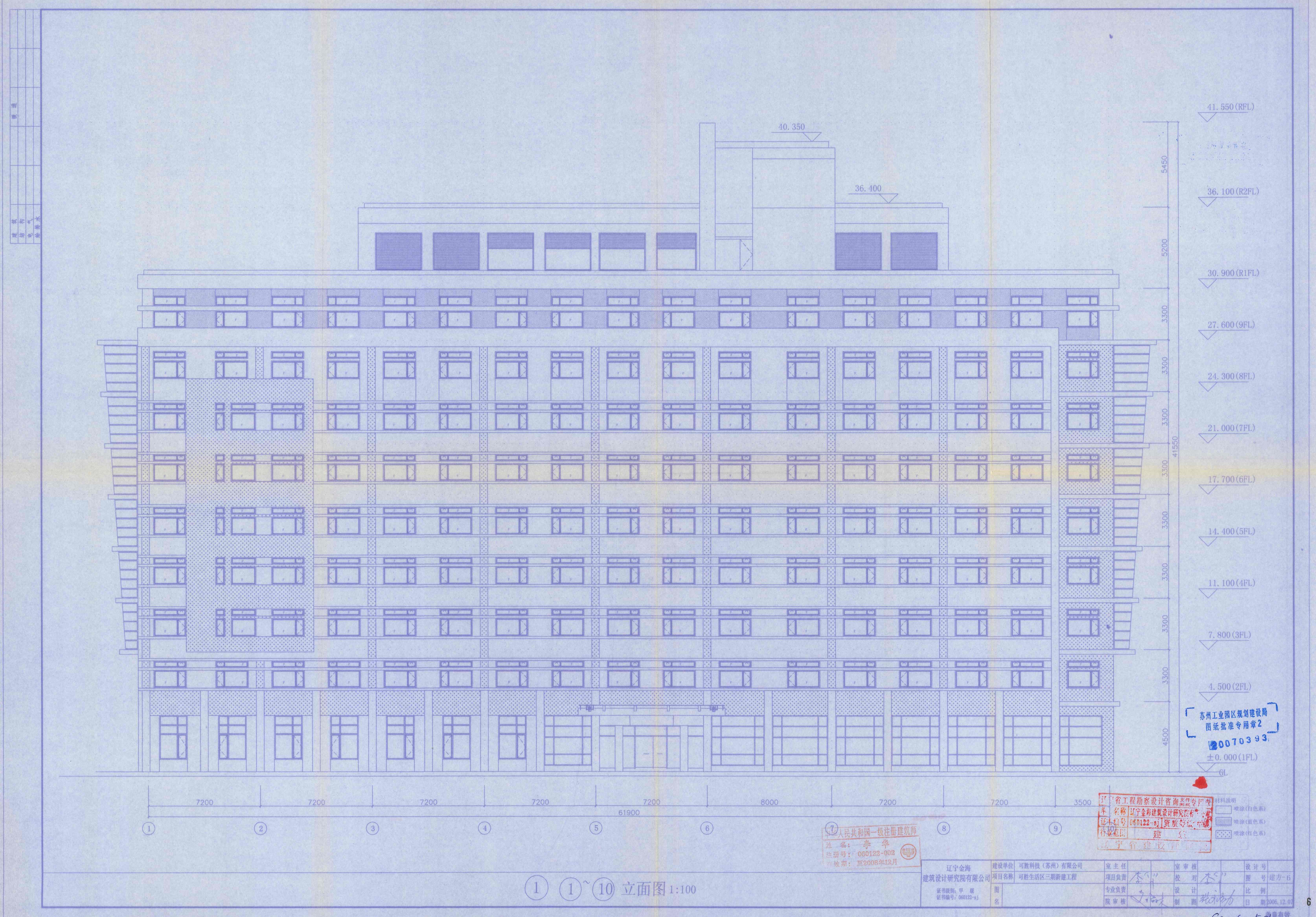
项目最初设计图纸©苏州工业园区城市重建有限公司Initial Design Plans
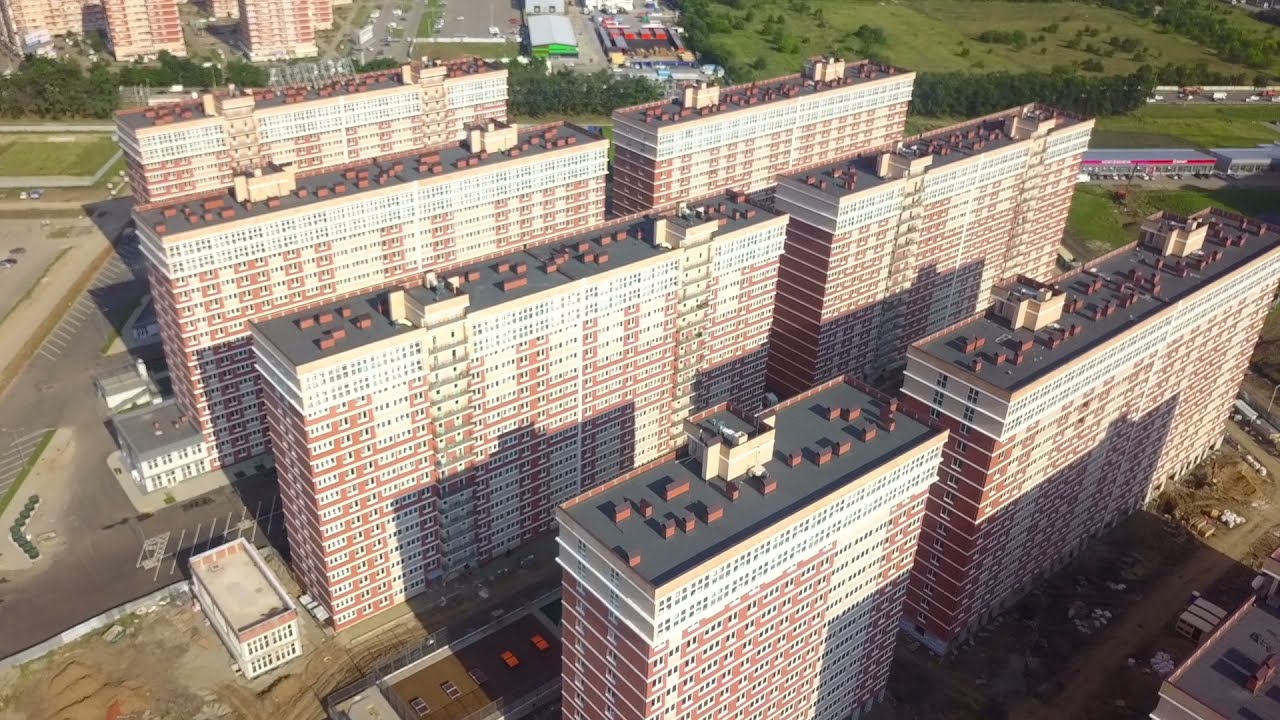
俄罗斯南部克拉斯诺达尔的建筑群©网络
Krasnodar, Southern Russia – Comparable Architecture
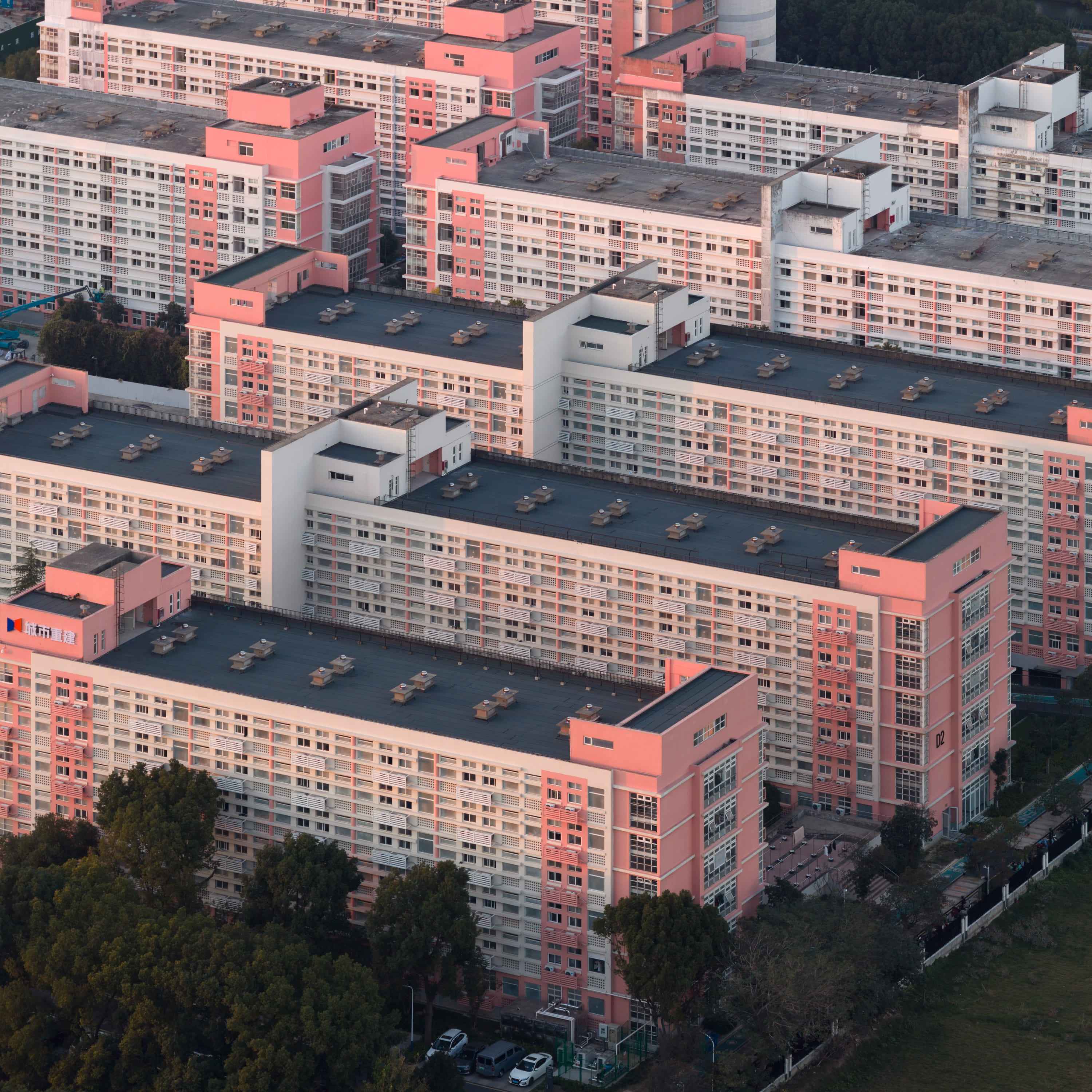
今天的可胜可利园区建筑 ©陈曦工作室
Topo & Meeca Technology (SuZhou) Dormitory Today
建筑密集的开窗和带孔的混凝土砖墙则是一种实用的、因地制宜的处理方式。建筑底部架空的廊道和原设计中开放的首层服务空间,则是自1920年代国际风格出现以来现代建筑一直传承的基因。这种处理在格鲁吉亚第比利斯的集体公寓、斯洛伐克布拉迪斯拉瓦的公寓,以及日本东京的南砂集合住宅项目中也有极为类似的案例。
The dense arrangement of openings and the use of perforated concrete block walls represent a pragmatic, site-responsive strategy. The elevated ground-level corridors and the originally open service spaces on the first floor inherit a lineage of modern architecture dating back to the emergence of the International Style in the 1920s.
Comparable approaches can be found in collective housing projects in Tbilisi, Georgia, apartment buildings in Bratislava, Slovakia, and the Minamisuna Housing Complex in Tokyo, Japan.
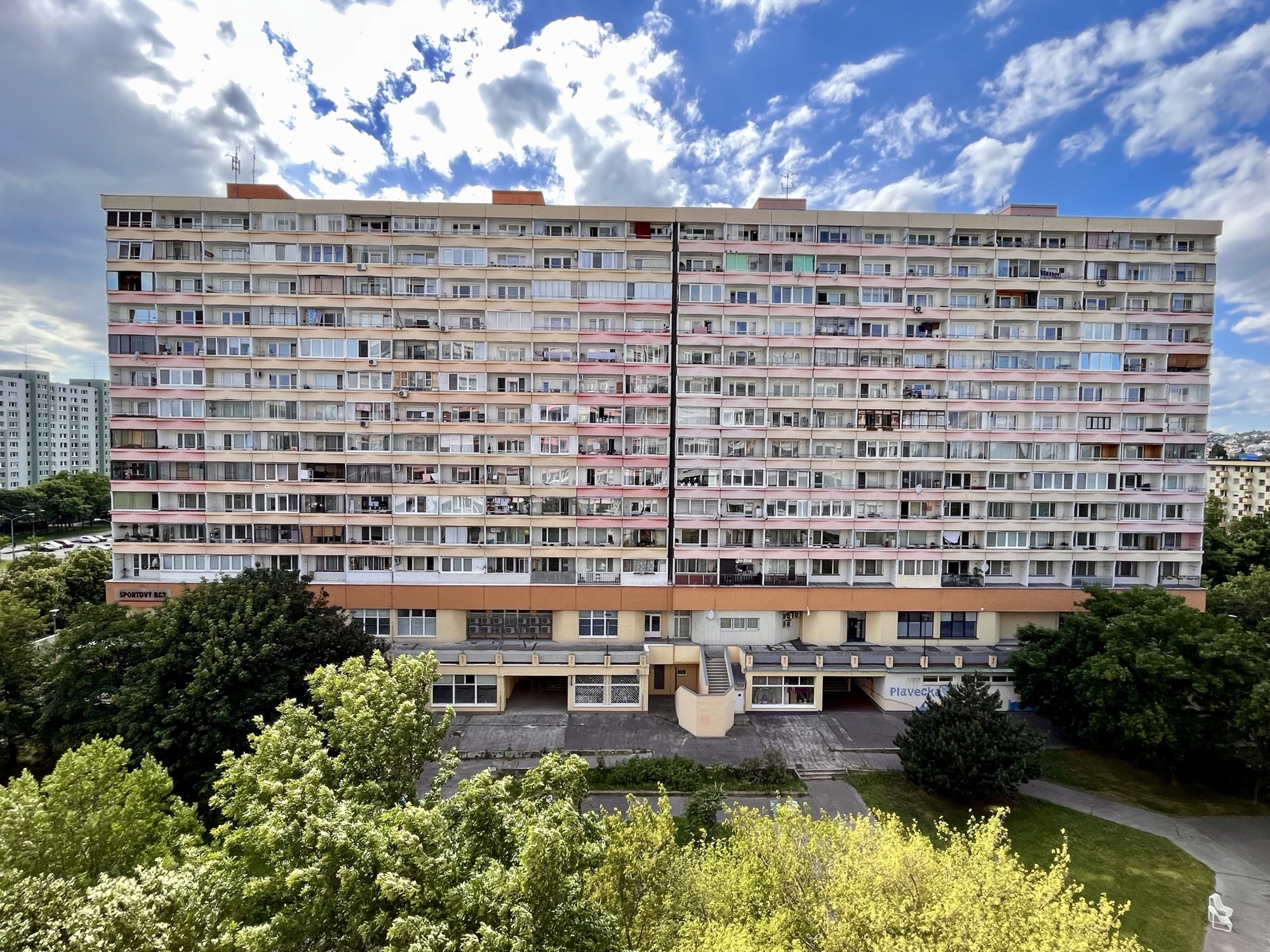
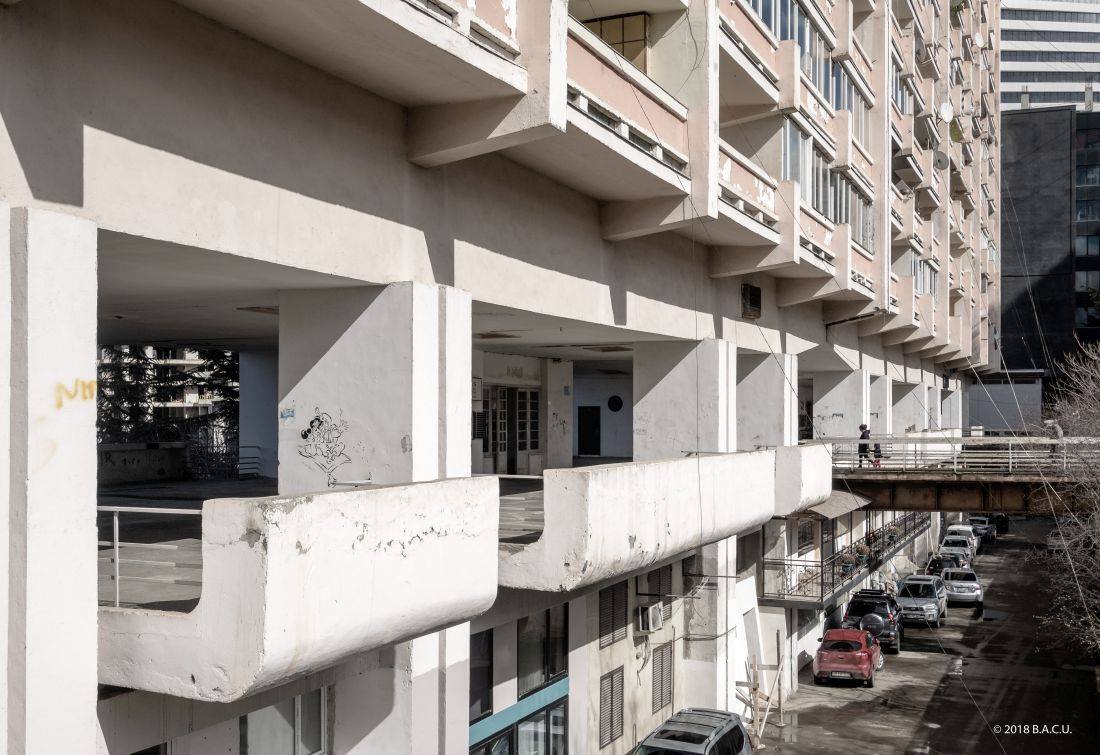
斯洛伐克与格鲁吉亚的集体公寓中也有类似风格©网络
Comparable Collective Housing in Slovakia and Georgia
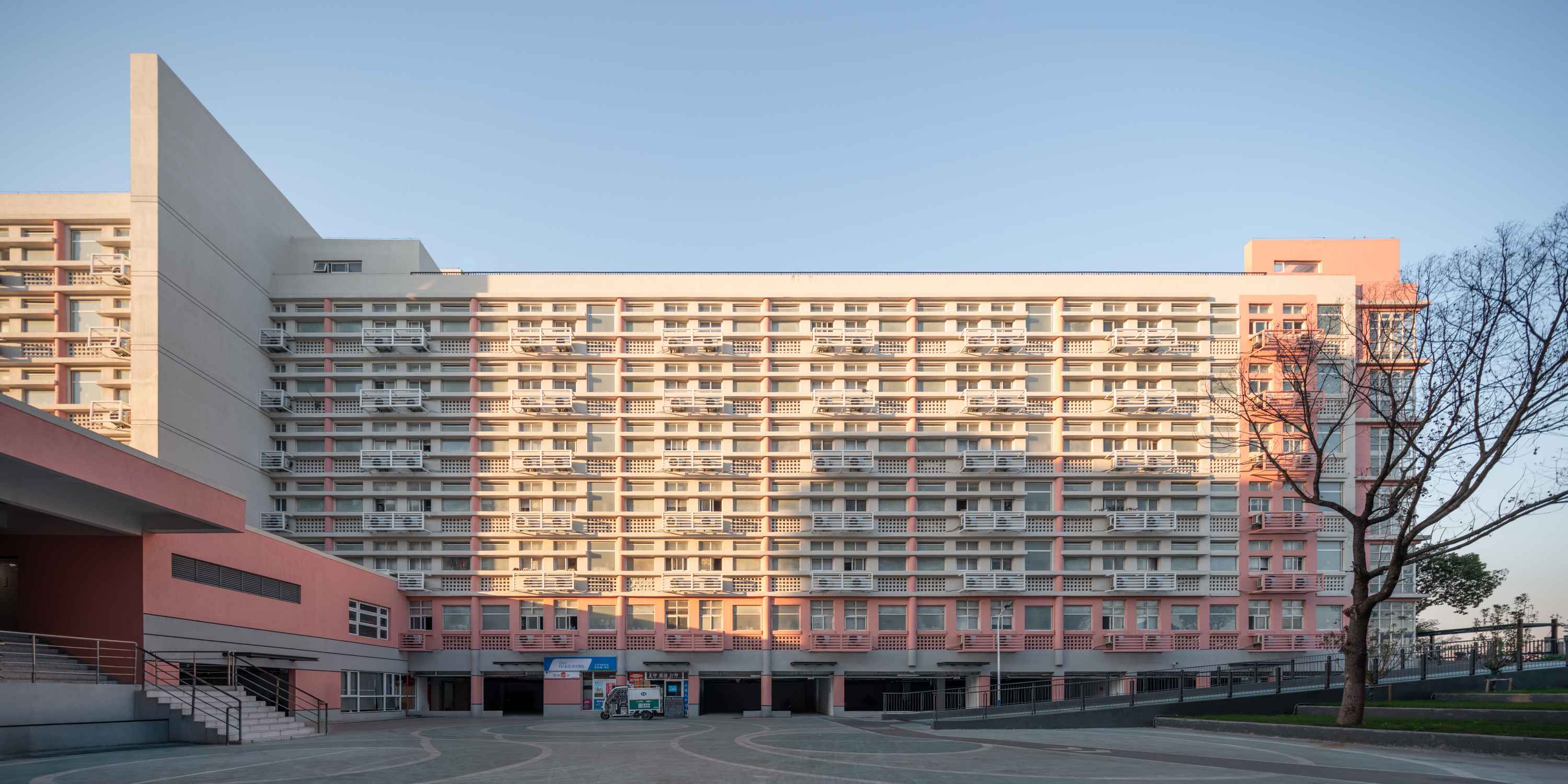
今天的可胜可利园区建筑 ©陈曦工作室
Topo & Meeca Technology (SuZhou) Dormitory Today
weico介入本项目的态度非常明确,即修复、活化,但不改变。我们的首要任务是恢复建筑原有的风格与材料表现,其次是通过最小的、可见与不可见的干预措施,修正后期各种被使用者叠加施予的改造,并弥补原有建筑中的设计不足-尤其是面对空调、卫浴水电等生活标准提高后的影响。
weico’s approach to the project was clear: to repair and activate, rather than to reinvent. The primary task was to restore the original architectural character and material expression. This was followed by a series of minimal—both visible and invisible—interventions to correct the layers of ad-hoc modifications added over time by occupants, and to compensate for the building’s original shortcomings, particularly in response to contemporary standards for air conditioning, plumbing, and electrical systems.
由于年代久远,很难从现有外立面上看出刚建成时建筑原有的颜色。建筑师和工程方进行了多次色彩调配和现场试样,最终选定了和历史资料较吻合、接受度较高的颜色配方。
Due to the passage of time, the original colors of the buildings were difficult to determine from the existing façades. The architects and engineers carried out multiple rounds of color matching and on-site mock-ups, ultimately selecting a palette that aligned closely with historical references while also achieving broad acceptance for contemporary use.
weico介入本项目的态度非常明确,即修复、活化,但不改变。我们的首要任务是恢复建筑原有的风格与材料表现,其次是通过最小的、可见与不可见的干预措施,修正后期各种被使用者叠加施予的改造,并弥补原有建筑中的设计不足-尤其是面对空调、卫浴水电等生活标准提高后的影响。
weico’s approach to the project was clear: to repair and activate, rather than to reinvent. The primary task was to restore the original architectural character and material expression. This was followed by a series of minimal—both visible and invisible—interventions to correct the layers of ad-hoc modifications added over time by occupants, and to compensate for the building’s original shortcomings, particularly in response to contemporary standards for air conditioning, plumbing, and electrical systems.
由于年代久远,很难从现有外立面上看出刚建成时建筑原有的颜色。建筑师和工程方进行了多次色彩调配和现场试样,最终选定了和历史资料较吻合、接受度较高的颜色配方。
Due to the passage of time, the original colors of the buildings were difficult to determine from the existing façades. The architects and engineers carried out multiple rounds of color matching and on-site mock-ups, ultimately selecting a palette that aligned closely with historical references while also achieving broad acceptance for contemporary use.

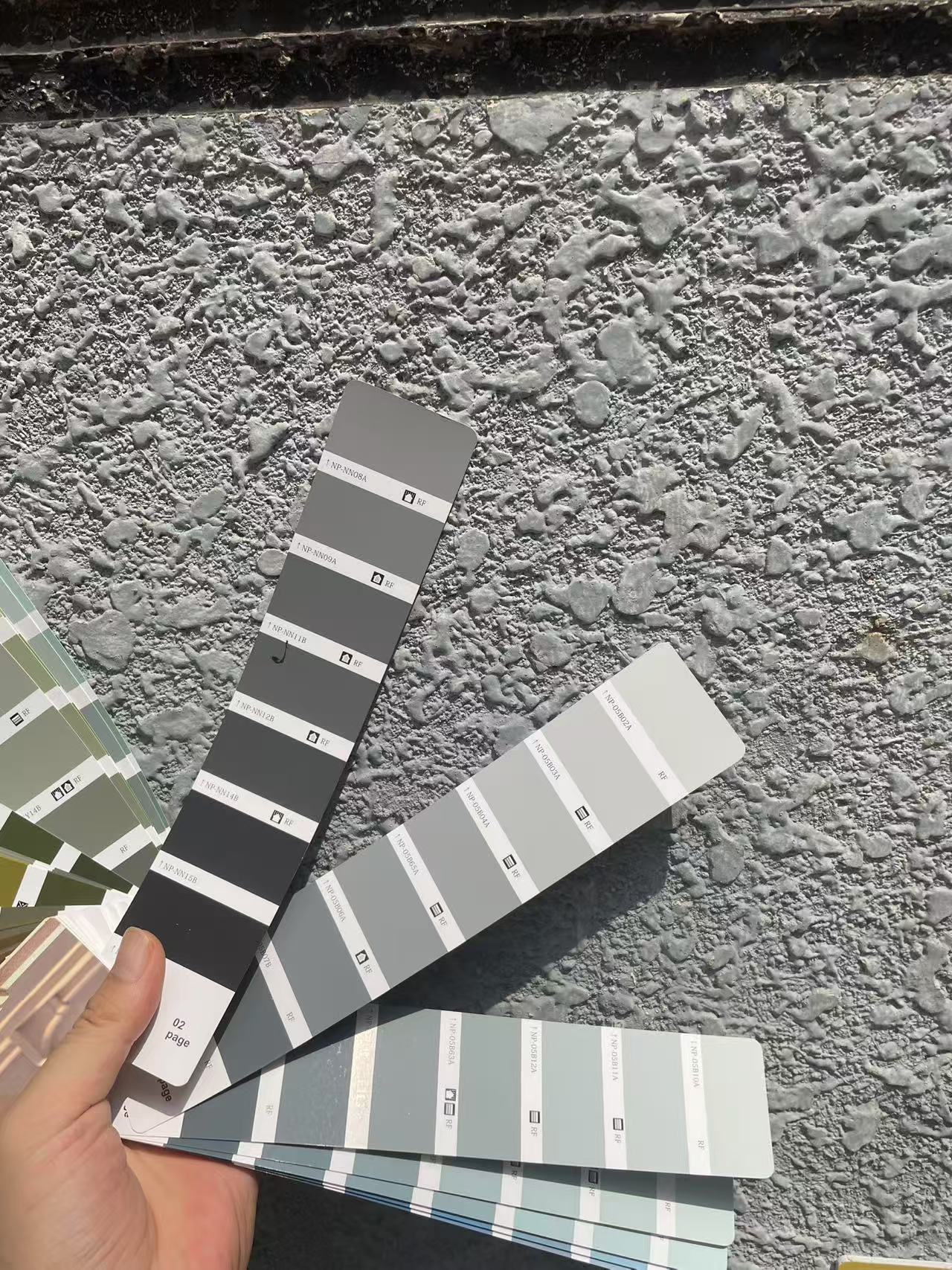
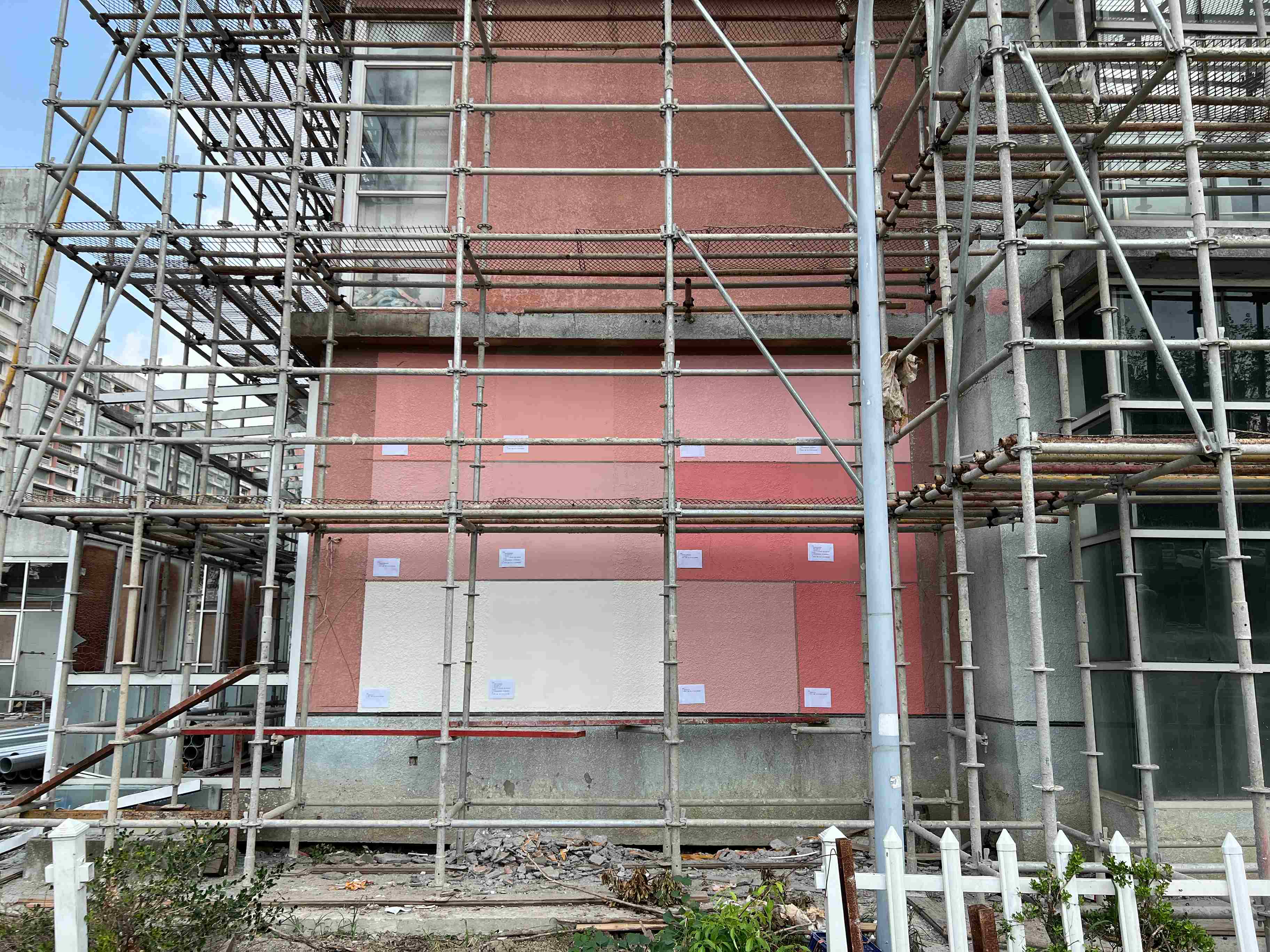
现场立面色彩试样 ©weico
Facade Color Tests on Site
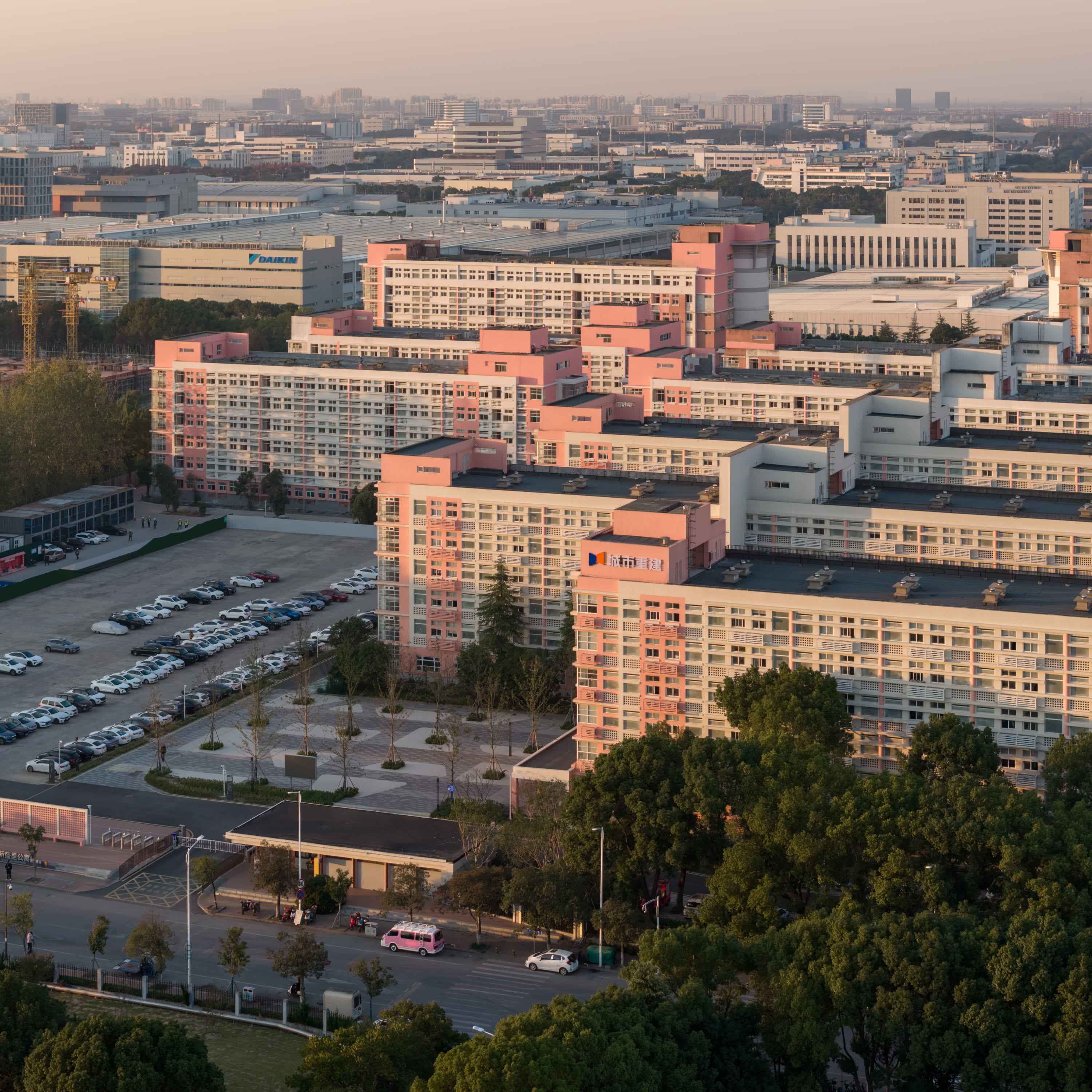
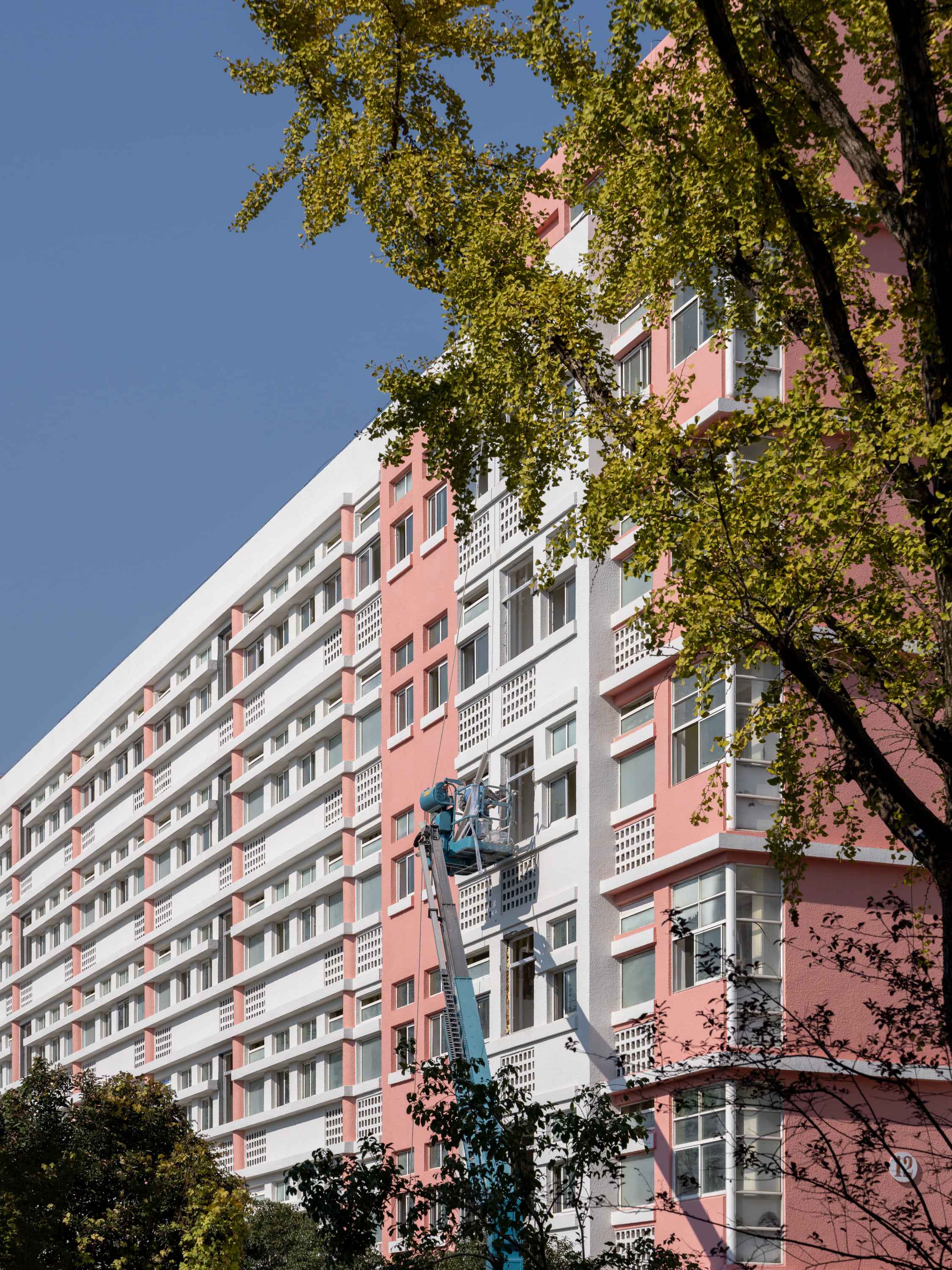
整体色彩效果 ©陈曦工作室
Final Facade Color Palette
整修后的建筑立面色彩温暖,白色构件和粉色墙面形成强烈的对比和光影效果。建筑的室内空间则摈弃了原本干湿不分离的设计,增加空间分割、去除后期添加的色彩、提高材料标准,呈现了简洁明快、性价比高的租住空间。
After renovation, the façades adopt a warm palette, where white elements contrast with soft pink walls to create a vivid interplay of light and shadow. Inside, the original undivided wet and dry layout was replaced with clearer spatial zoning, later-added colors were removed, and material standards were upgraded, resulting in rental units that are clean, bright, and cost-effective.
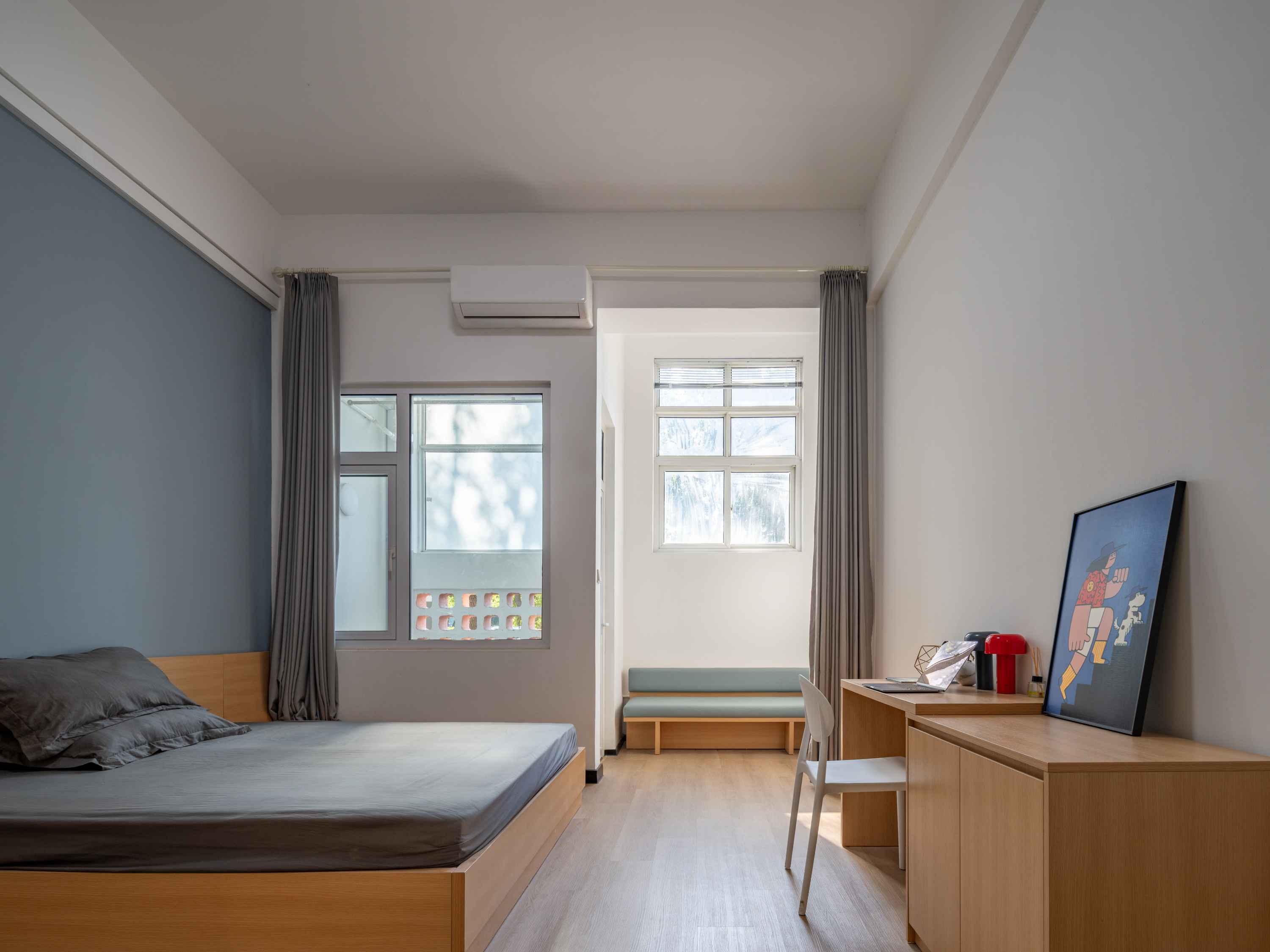
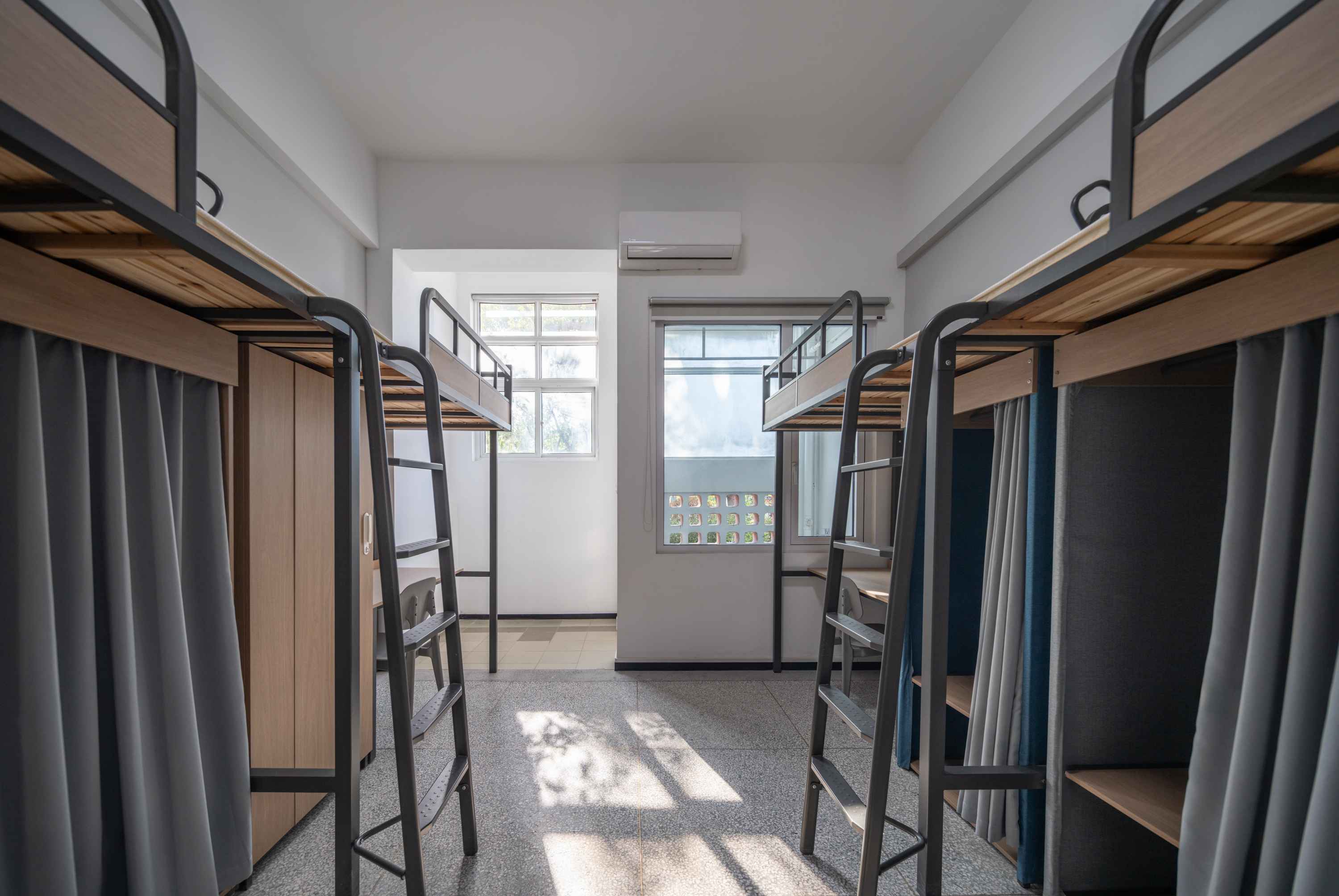
干湿分离后的宿舍内部 ©陈曦工作室
Separated Wet and Dry Dormitory Interiors
在建筑更新之外,我们在前期也对住客、物业以及周边邻居进行了走访,从公共空间、服务配套、停车组织等方面总结需求。结合使用人群的工作特点及生活方式,以“内外大循环”的方式重塑公共空间,让园区能兼顾私密和公共,让年轻人能感受到更开放、更积极的生活态度。
Beyond the building renovations, weico conducted preliminary surveys with residents, property managers, and neighboring communities to understand needs related to public spaces, service facilities, and parking organization. By considering the work patterns and lifestyles of the occupants, public spaces were reimagined through a strategy of “internal-external circulation,” balancing privacy and community engagement while fostering a more open and active environment for younger residents.
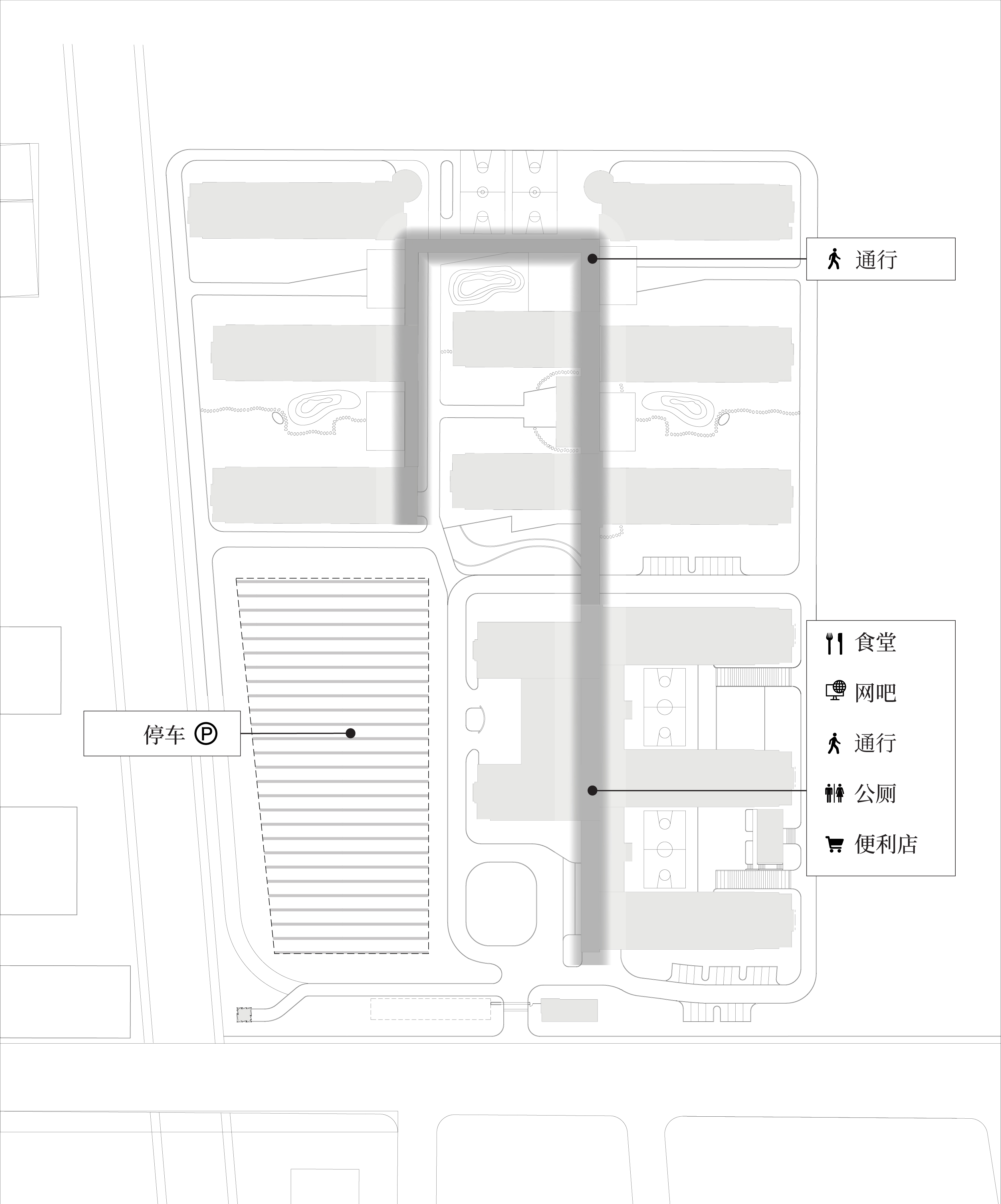
修复前空间关系©weico Pre-Renovation Spatial Layout
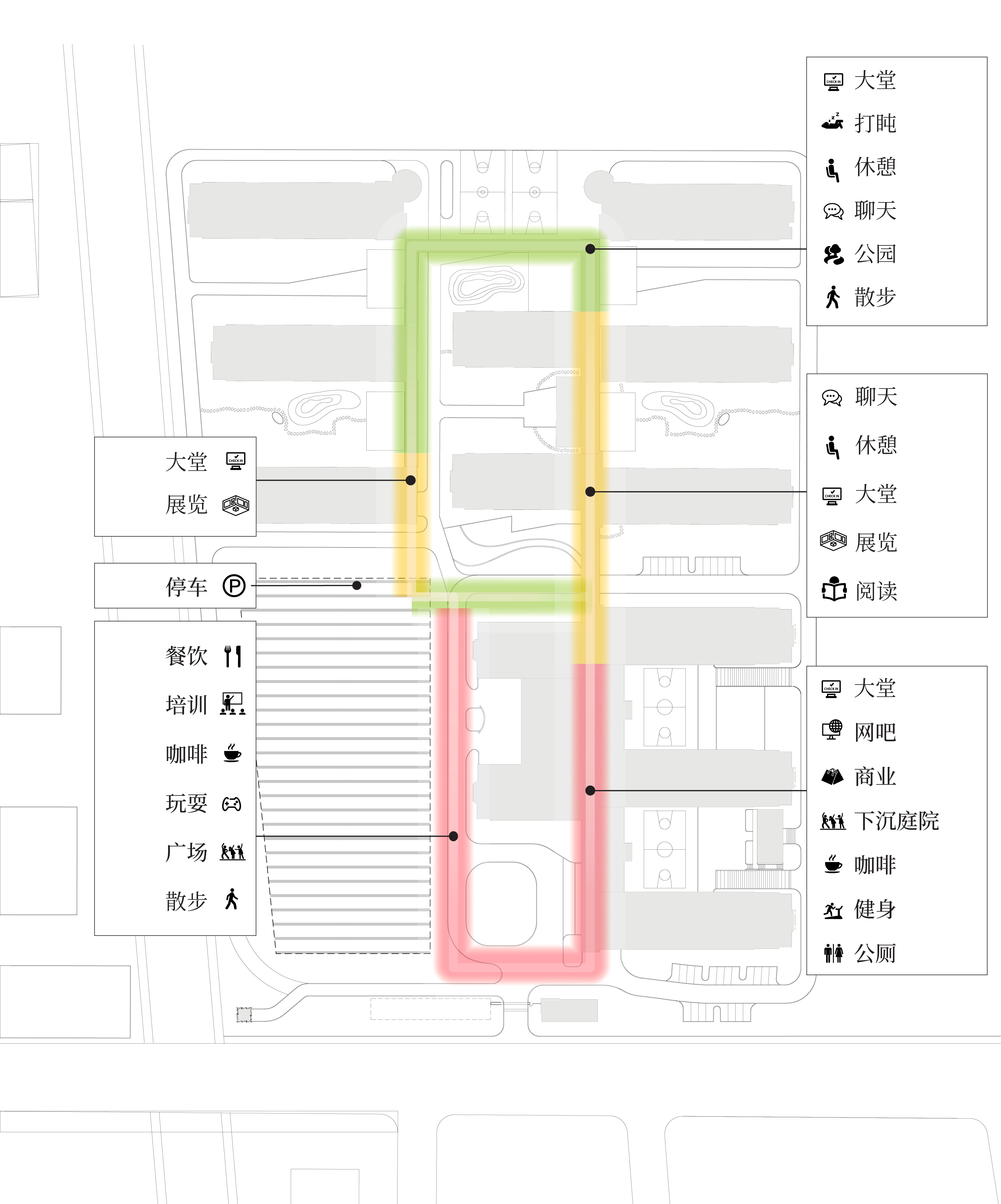
修复后空间关系©weico Post-Renovation Spatial Layout
园区入口原本是密集和难以打理的绿化带,我们重新设计景观,将入口打开,使入口广场可在“平日”模式和“可集”模式之间切换:平日作为景观集散空间,周末可转化为对外集市场地,更好地链接了园区和社会,也大大提升了宿舍门卫的形象。
Originally, the park’s entrance was a dense and difficult-to-maintain green belt. Through landscape redesign, the entrance was opened up, creating a plaza that can switch between a “weekday” mode and a “collective” mode: on weekdays, it functions as a landscaped gathering space, while on weekends it transforms into a public market, strengthening the connection between the park and the surrounding community and enhancing the presence of the dormitory gatehouse.
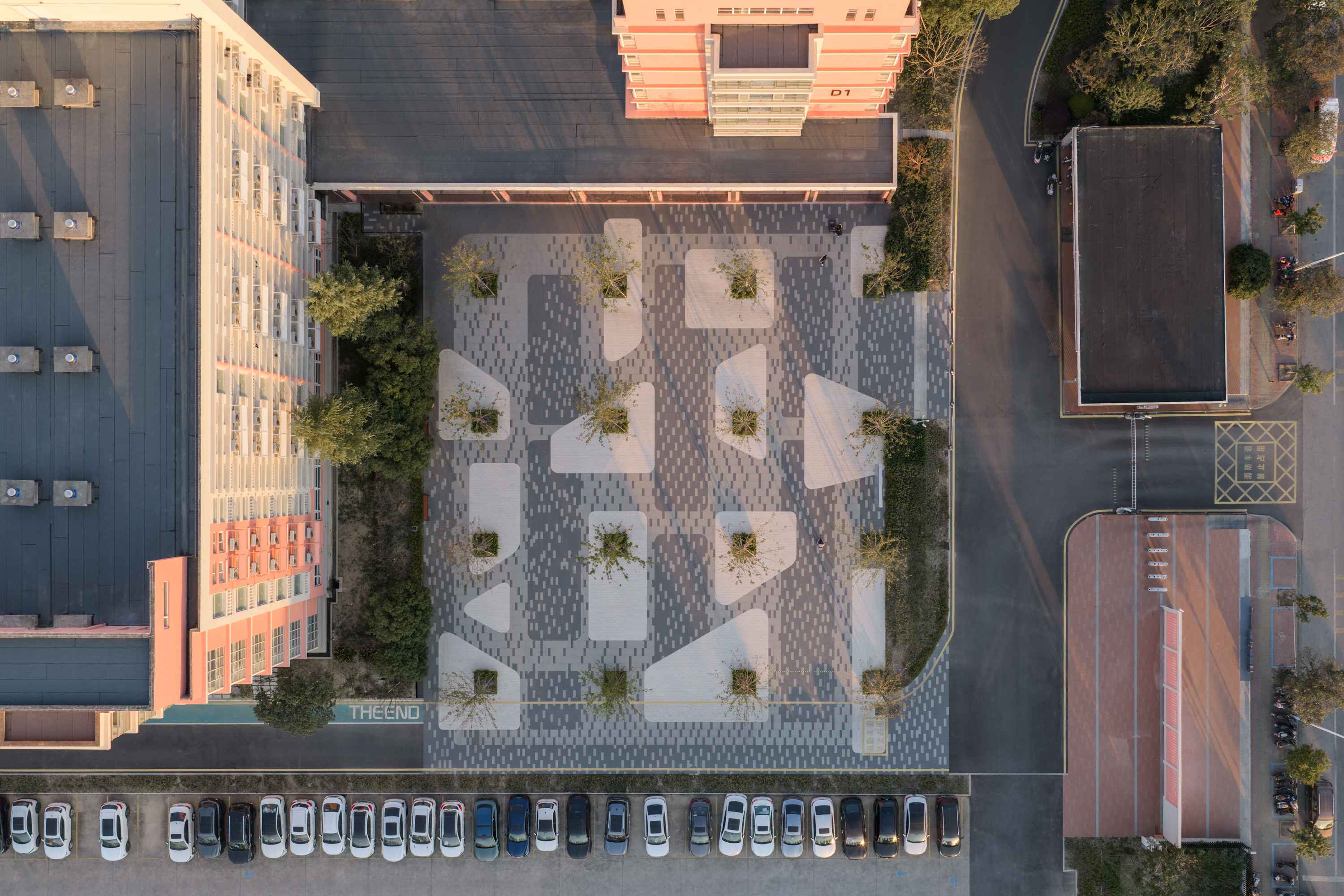
入口广场©陈曦工作室
Entrance Plaza
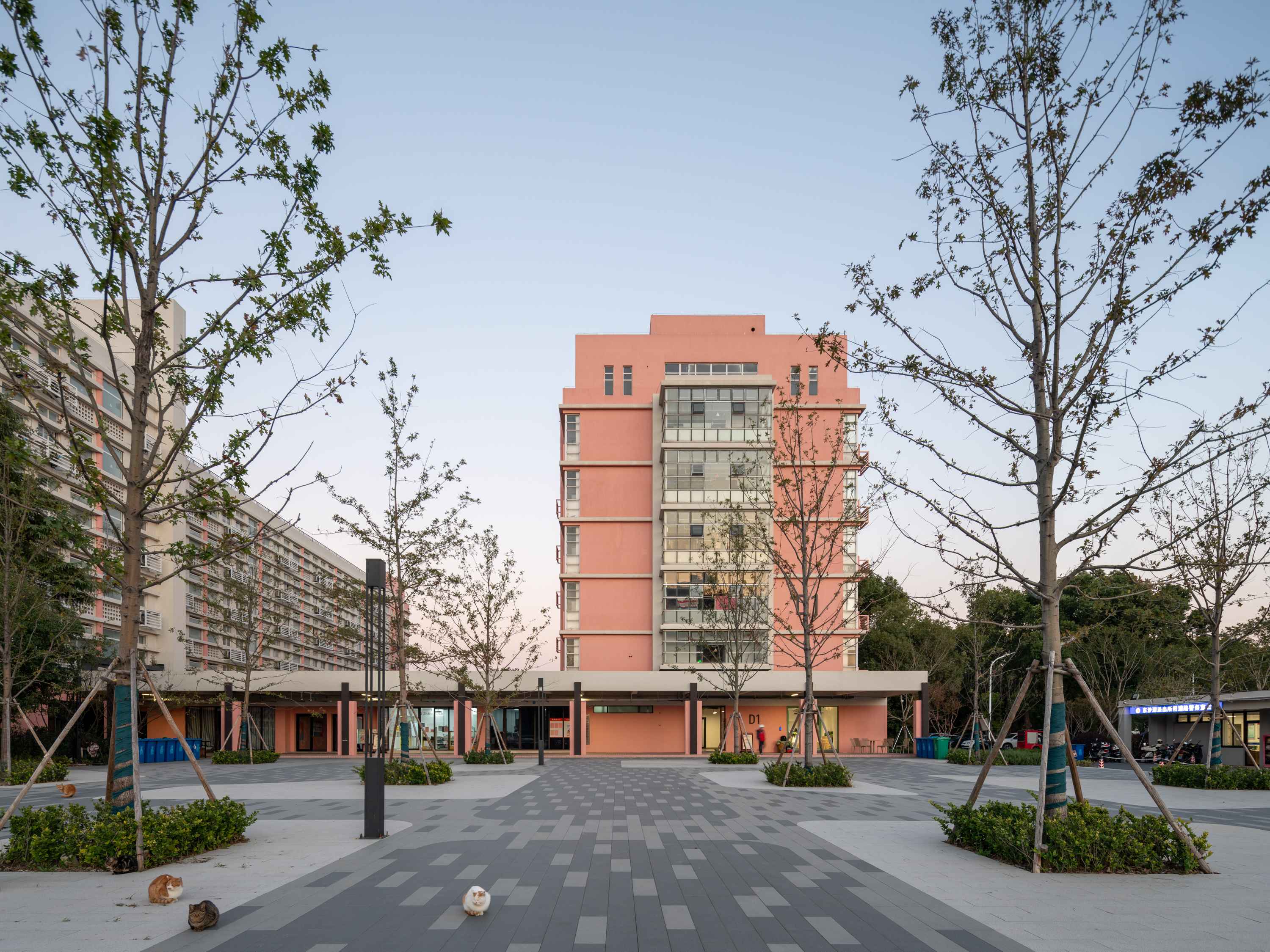
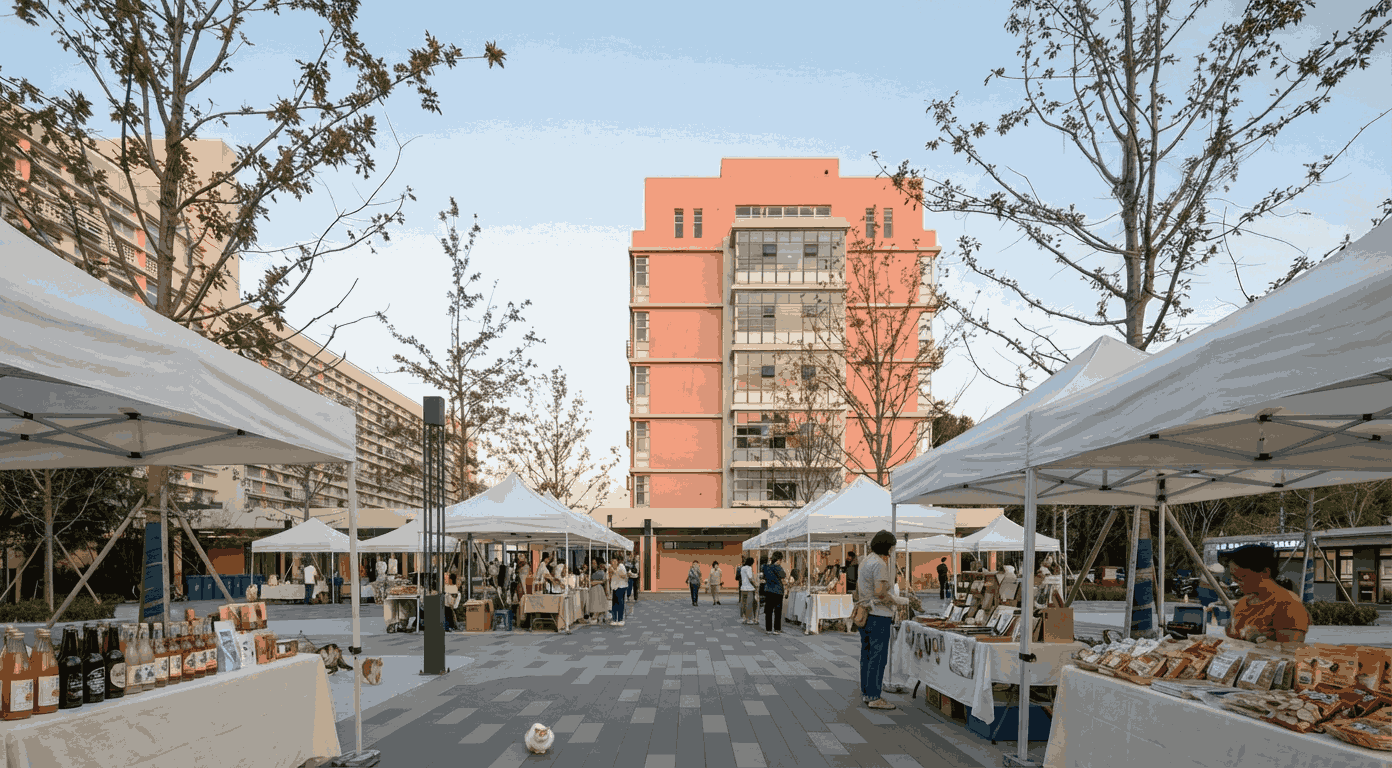
“平日”模式和“可集“模式©陈曦工作室
“Weekday” Mode and “Market” Mode
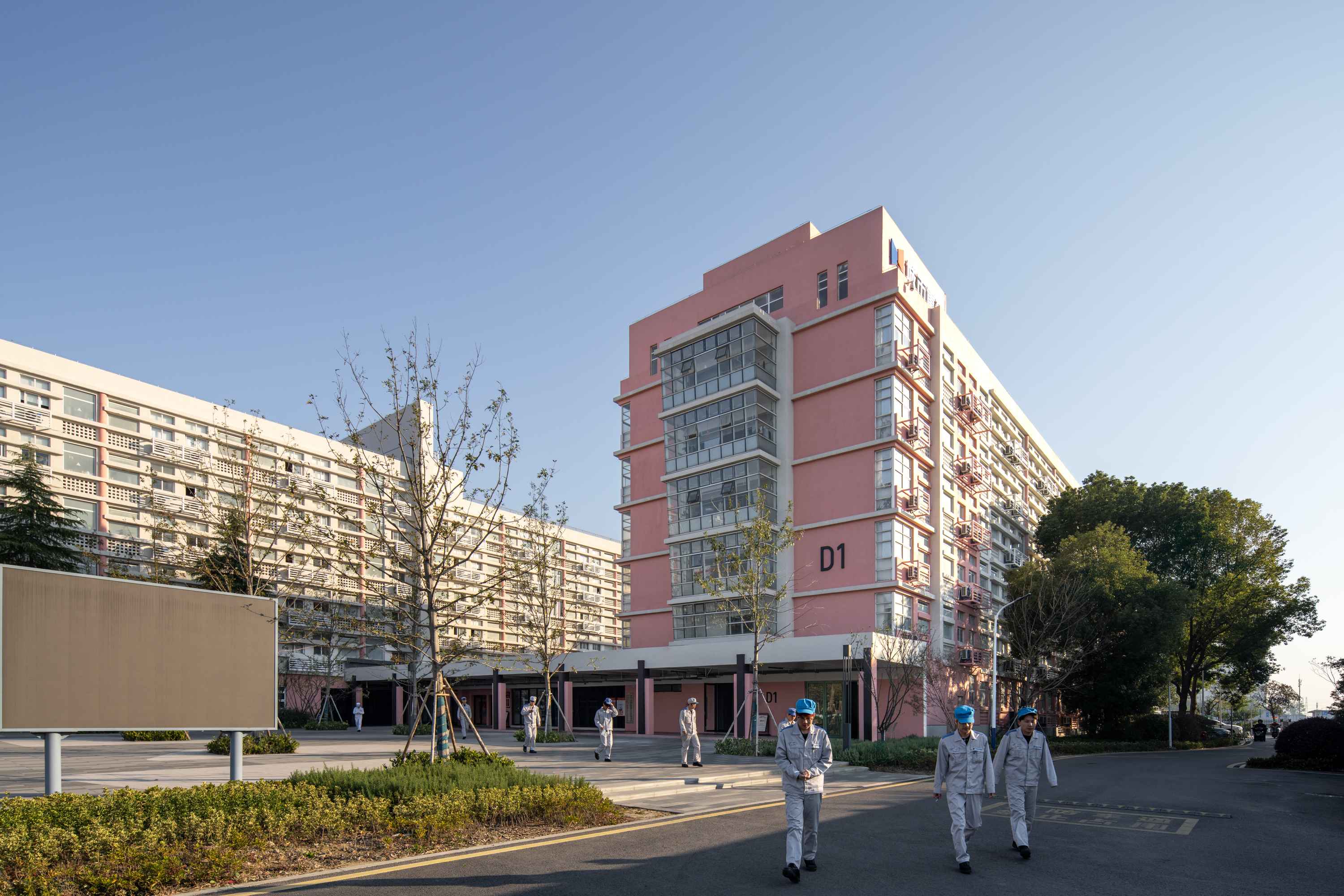
开放的宿舍区门卫区域©陈曦工作室
Open Dormitory Gatehouse Area
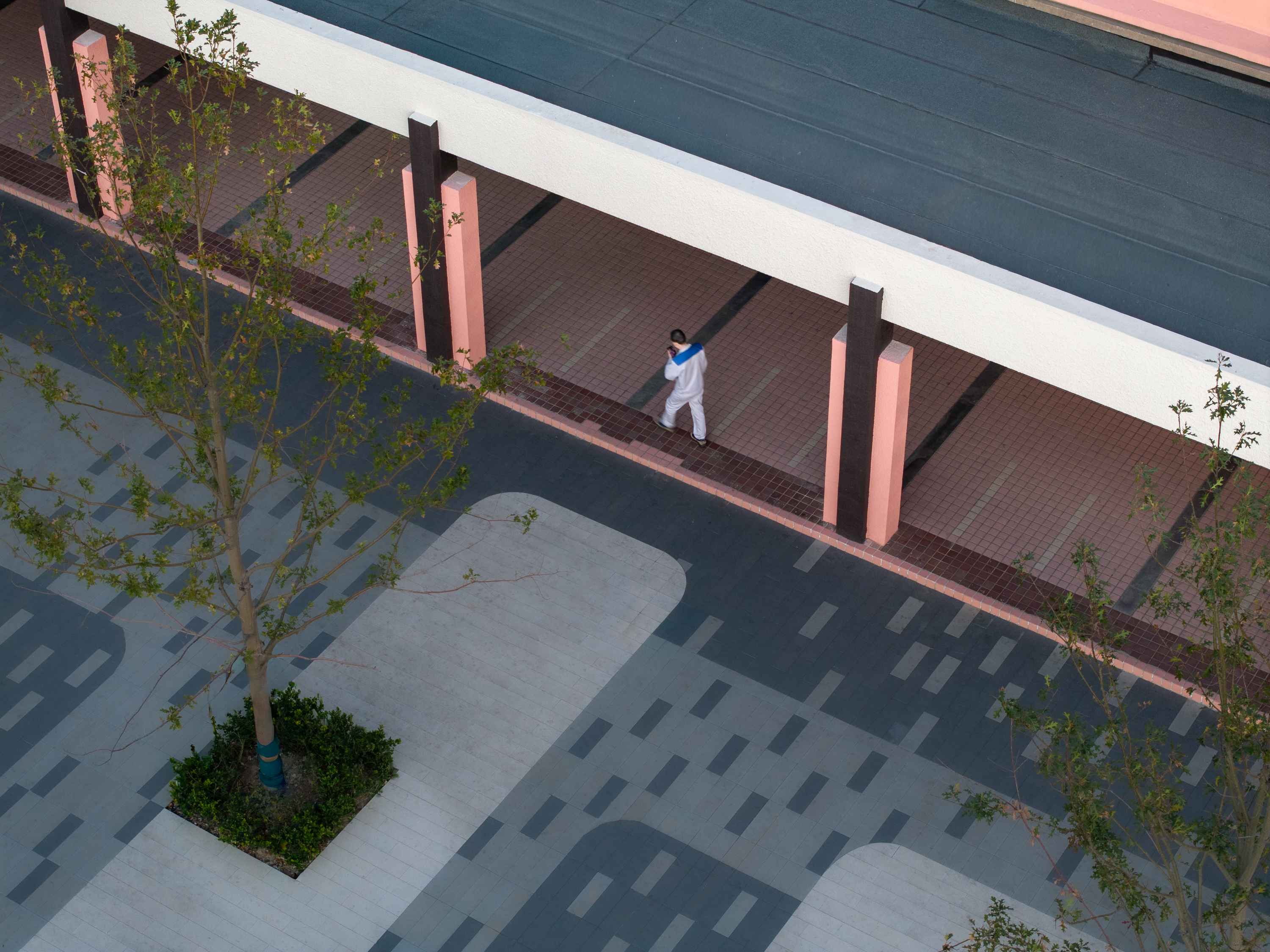
宿舍建筑之间的连廊在延续原有空间结构的基础上,做了更中性更通透的颜色和材料处理,使连廊从单纯通道转变为具有识别度的公共界面,为它成为整个园区生活轴线提供了基础。
The corridors connecting the dormitory buildings retained the original spatial layout but were treated with more neutral and transparent colors and materials. This transformation elevated the corridors from mere passageways to recognizable public interfaces, establishing a backbone for the park’s overall circulation and daily life.
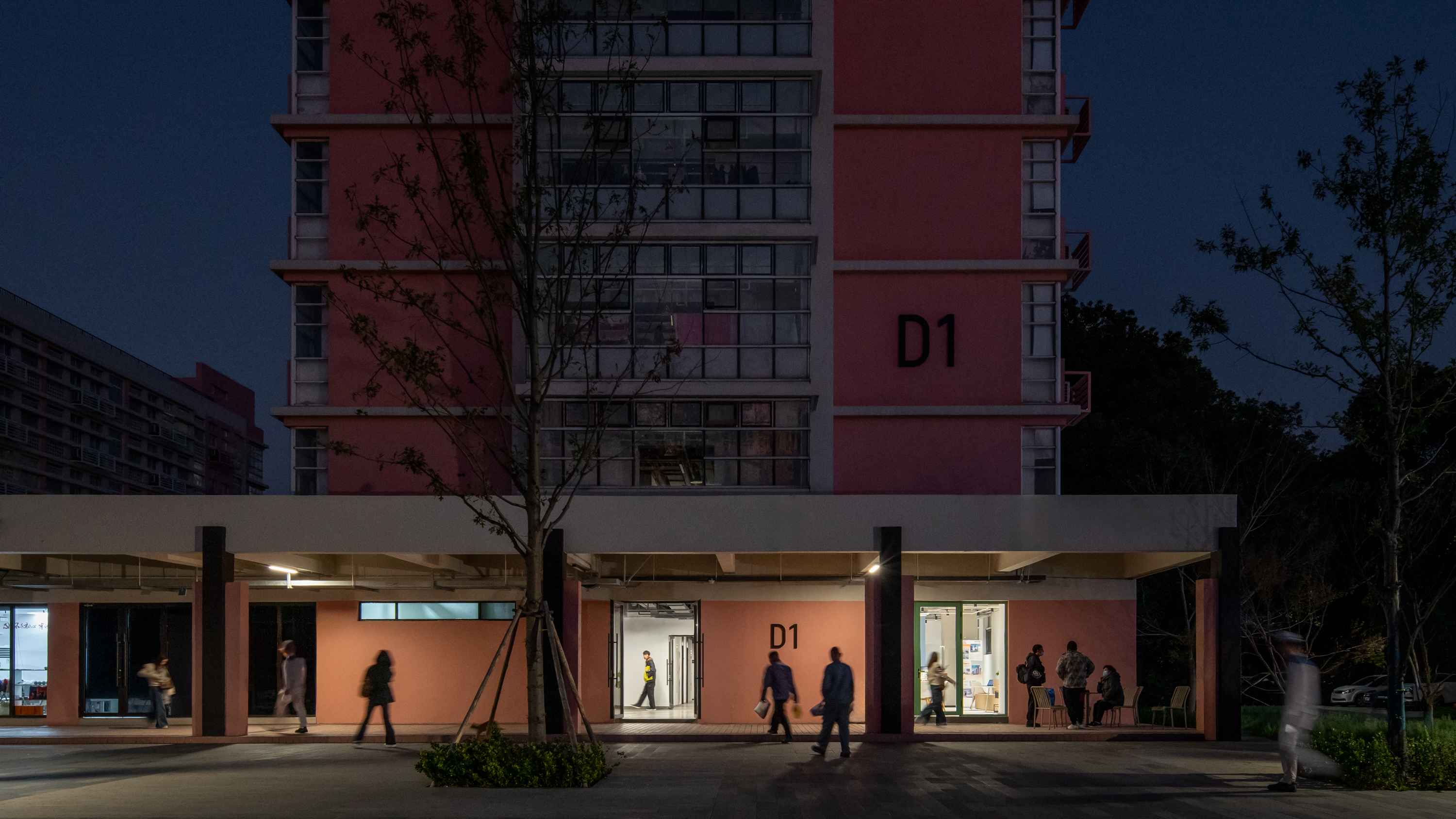
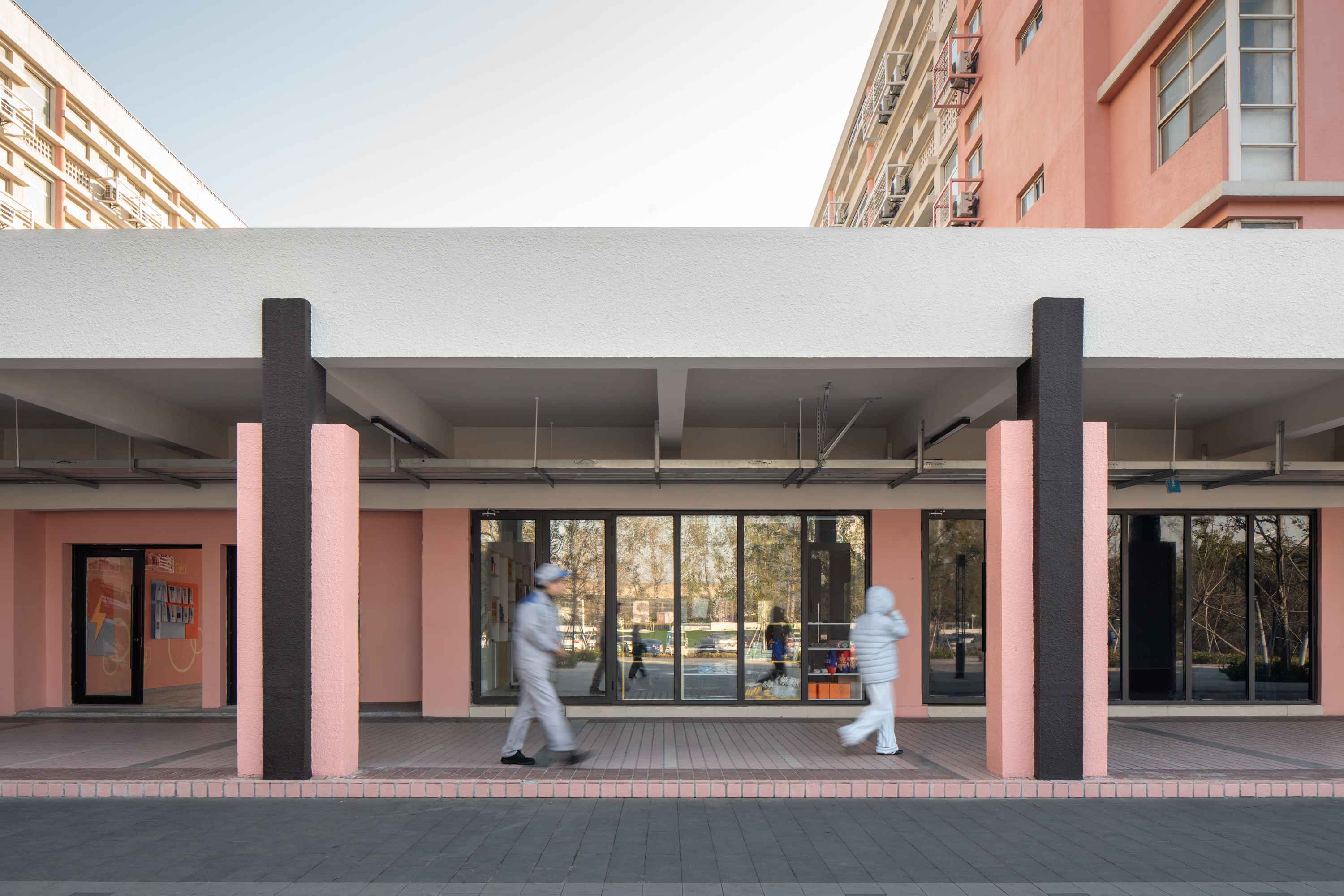
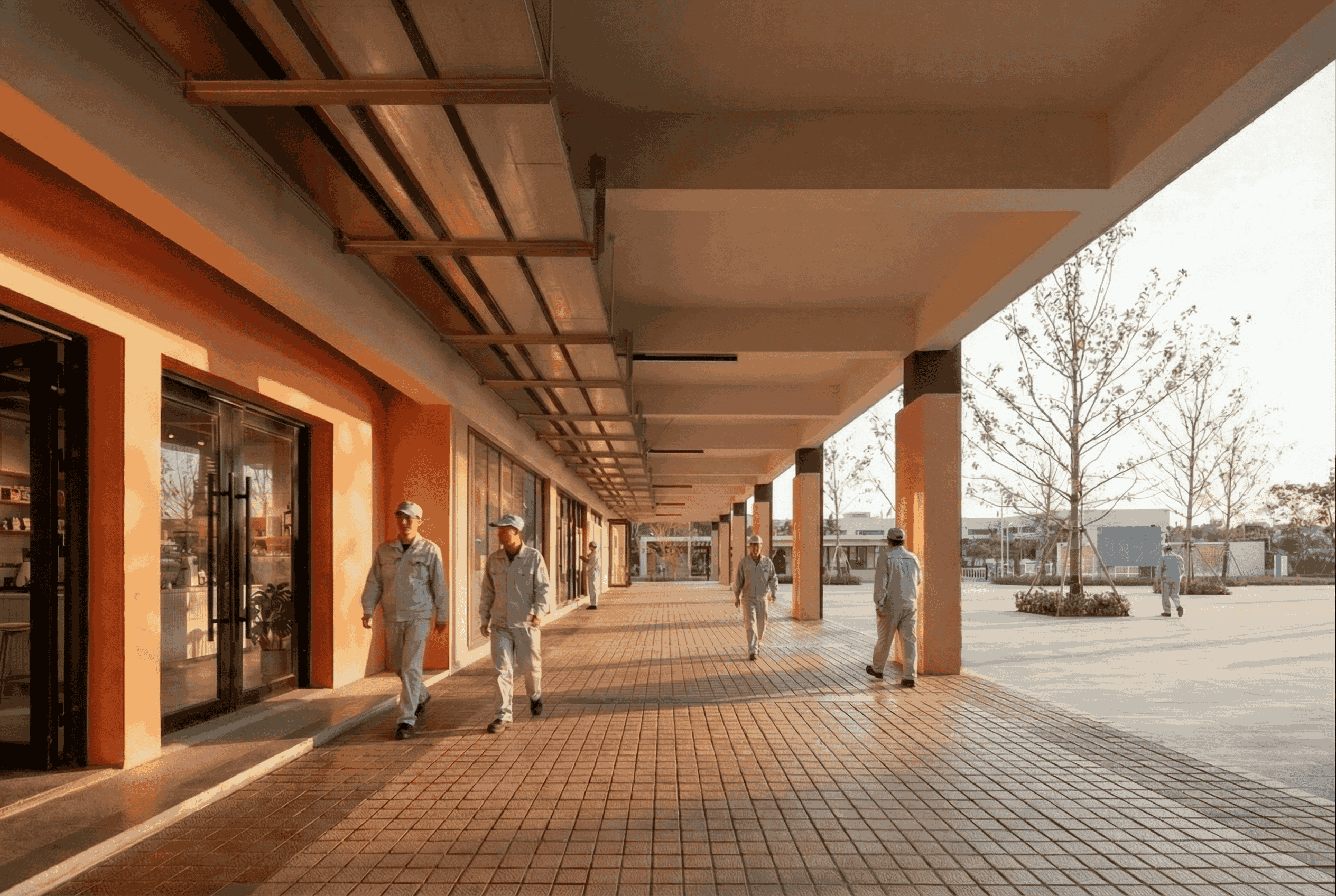
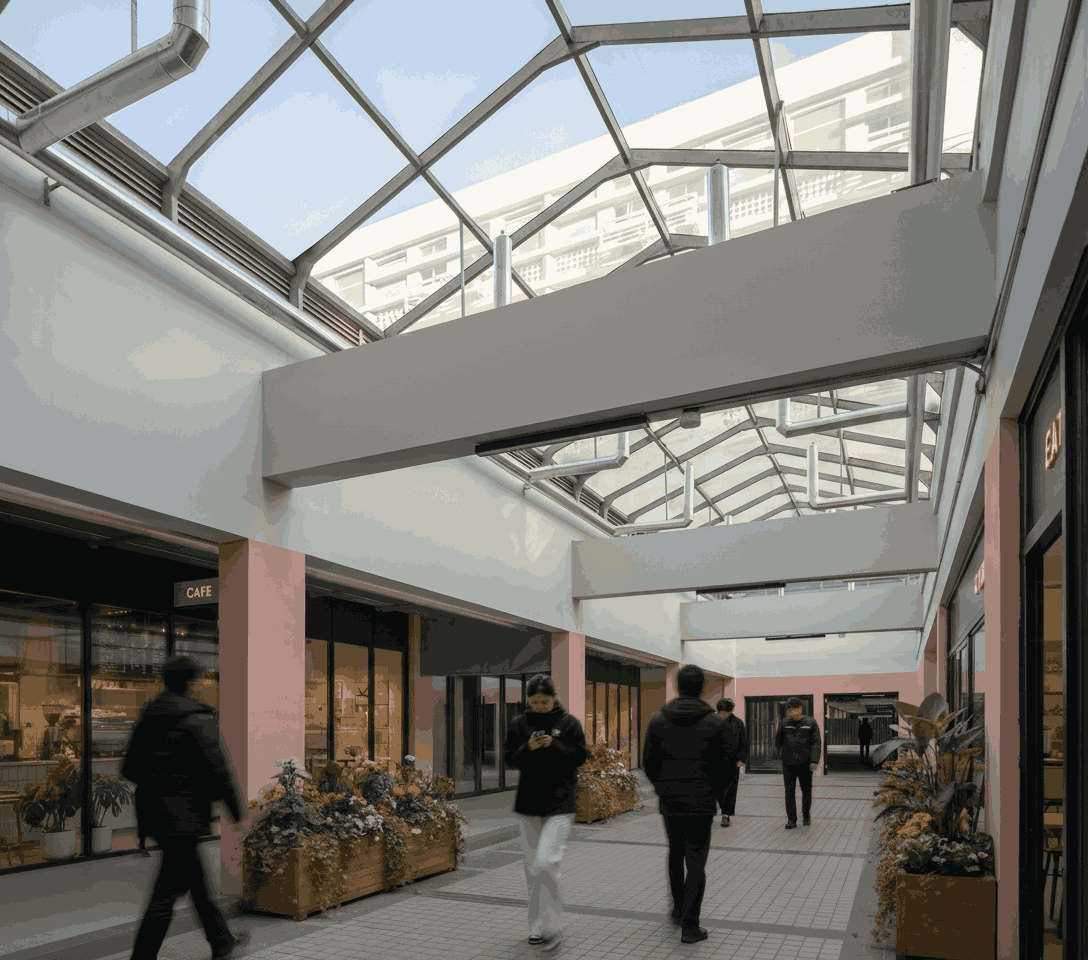
重新注入活力的连廊(组图)©陈曦工作室
Revitalized Corridors (Image Series)
园区和城市之间原本是扎满刺藜的围墙,在更换形式、局部打开之后,变成园区与城市之间的半开放的界面:安全管理、入住、班车集散、招工、街头餐饮,这些寻常烟火气一如既往地存在,且更加自由、更加轻松。
Originally, the boundary between the park and the city was defined by a dense wall of thorny shrubs. By reconfiguring and partially opening this barrier, it has been transformed into a semi-open interface, where everyday urban activities—such as security management, resident check-ins, shuttle coordination, labor recruitment, and street food—continue to take place, now in a more liberated and relaxed manner.
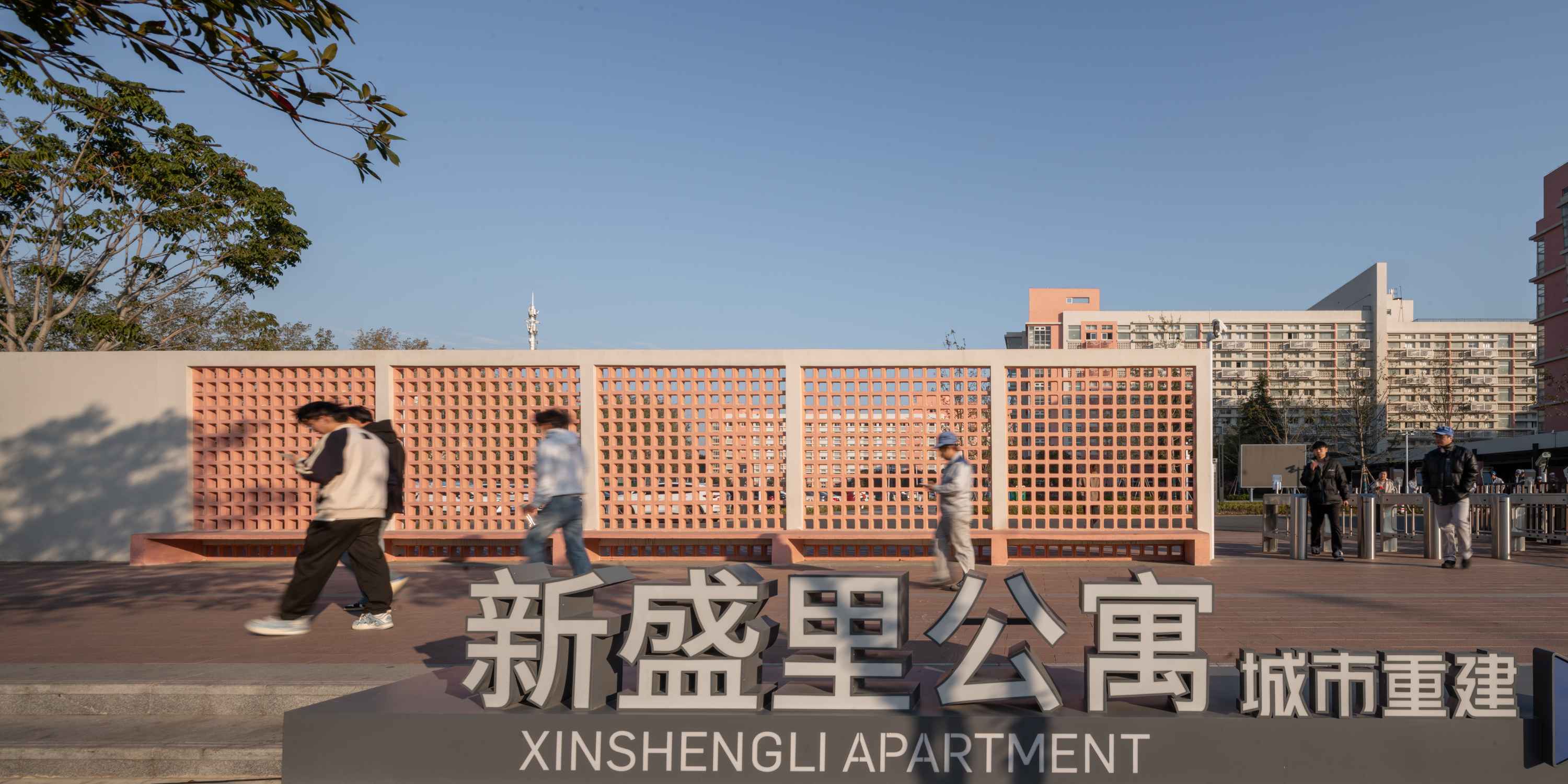
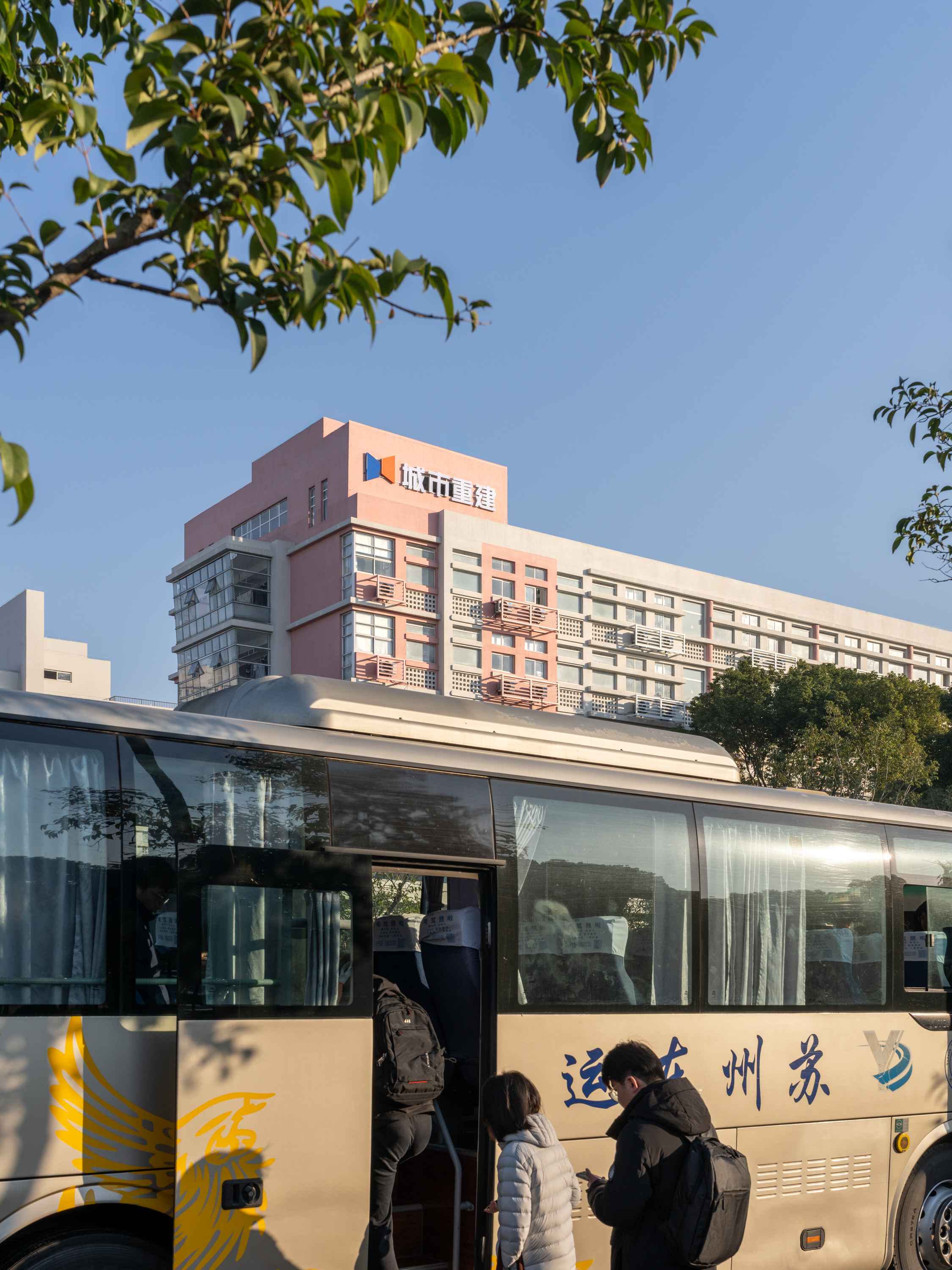
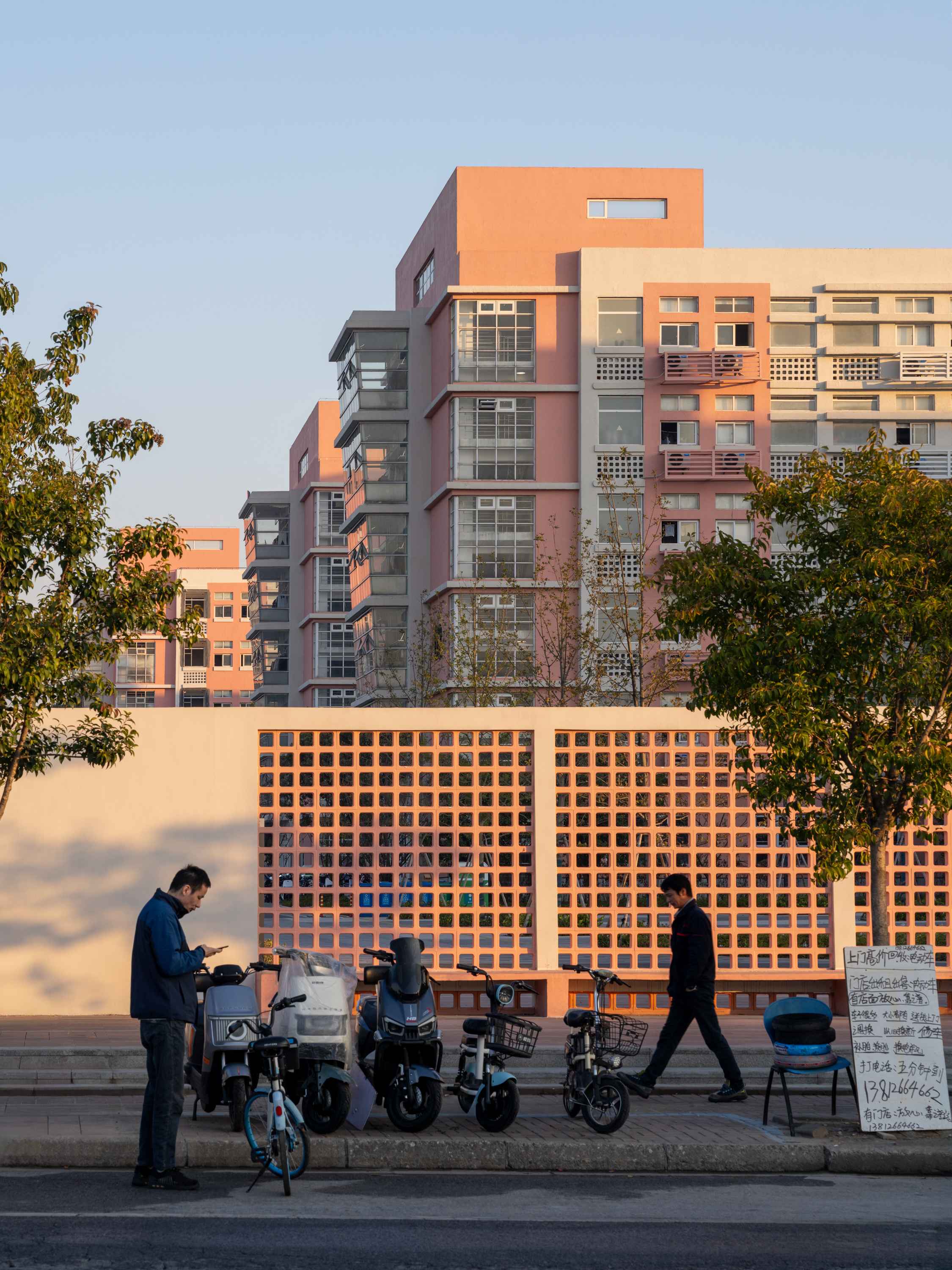
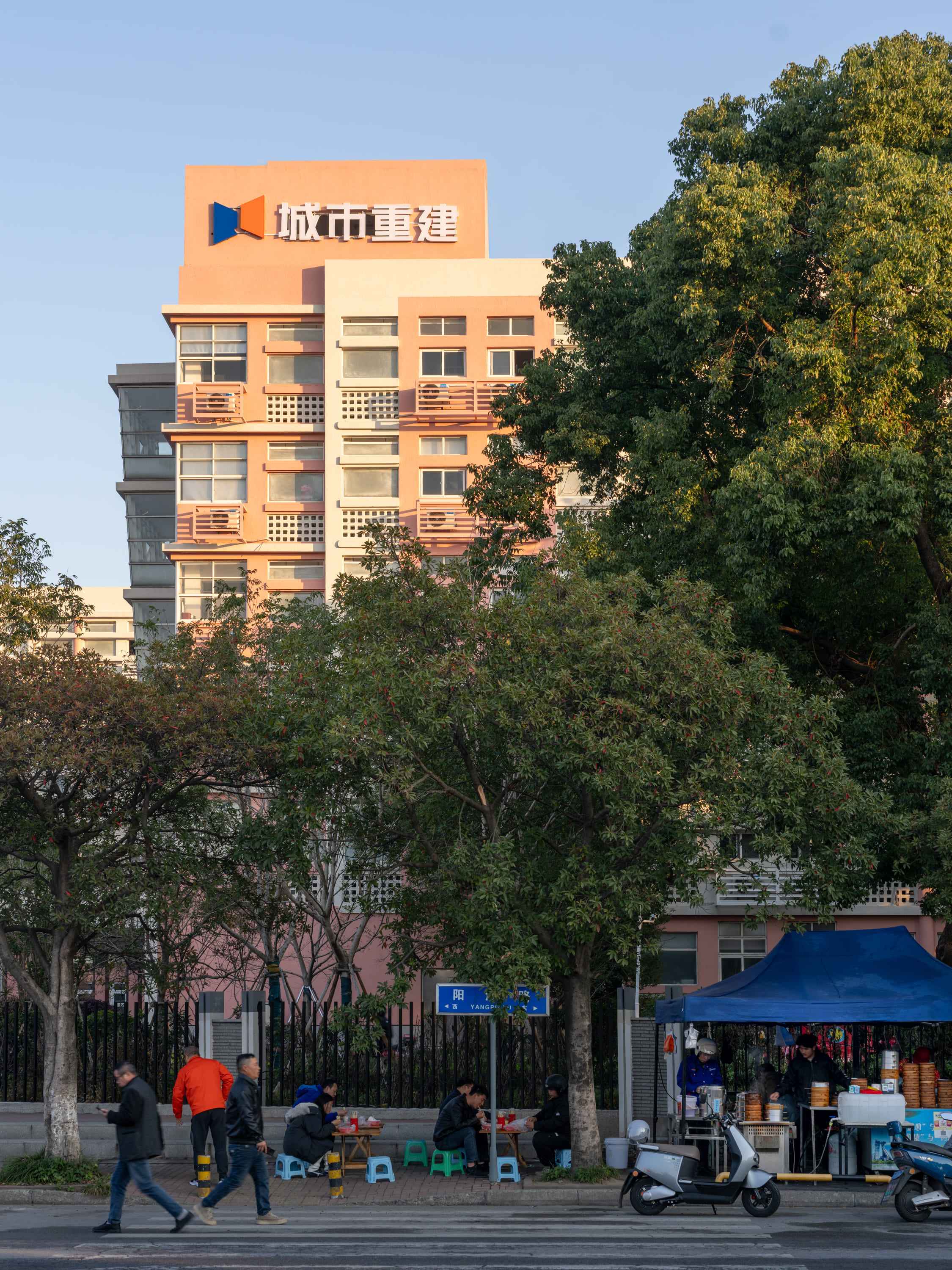
园区与城市的关系(组图)©陈曦工作室
Relationship Between the Park and the City (Image Series)
建筑师的工作不只是改变形态,更是在时间中不断修复人与空间的连接方式,weico此次并没有选择表现大刀阔斧的重新创作,而是在原有历史和生活痕迹中寻找新的可能,让建筑重新被看见,让空间重新被使用,让人与社区的关系重新建立。这个新的工人宿舍区,正在以更温和更本来的姿态,重新参与到当下的苏州的发展之中。
An architect’s role is not merely to reshape form, but to continually repair the relationship between people and space over time. In this project, weico chose not to pursue a radical reinvention; instead, it sought new possibilities within the existing historical and lived traces, allowing the buildings to be seen anew, the spaces to be reactivated, and the connections between residents and the community to be rebuilt. This revitalized workers’ dormitory now participates in contemporary Suzhou with a gentler, more authentic presence.
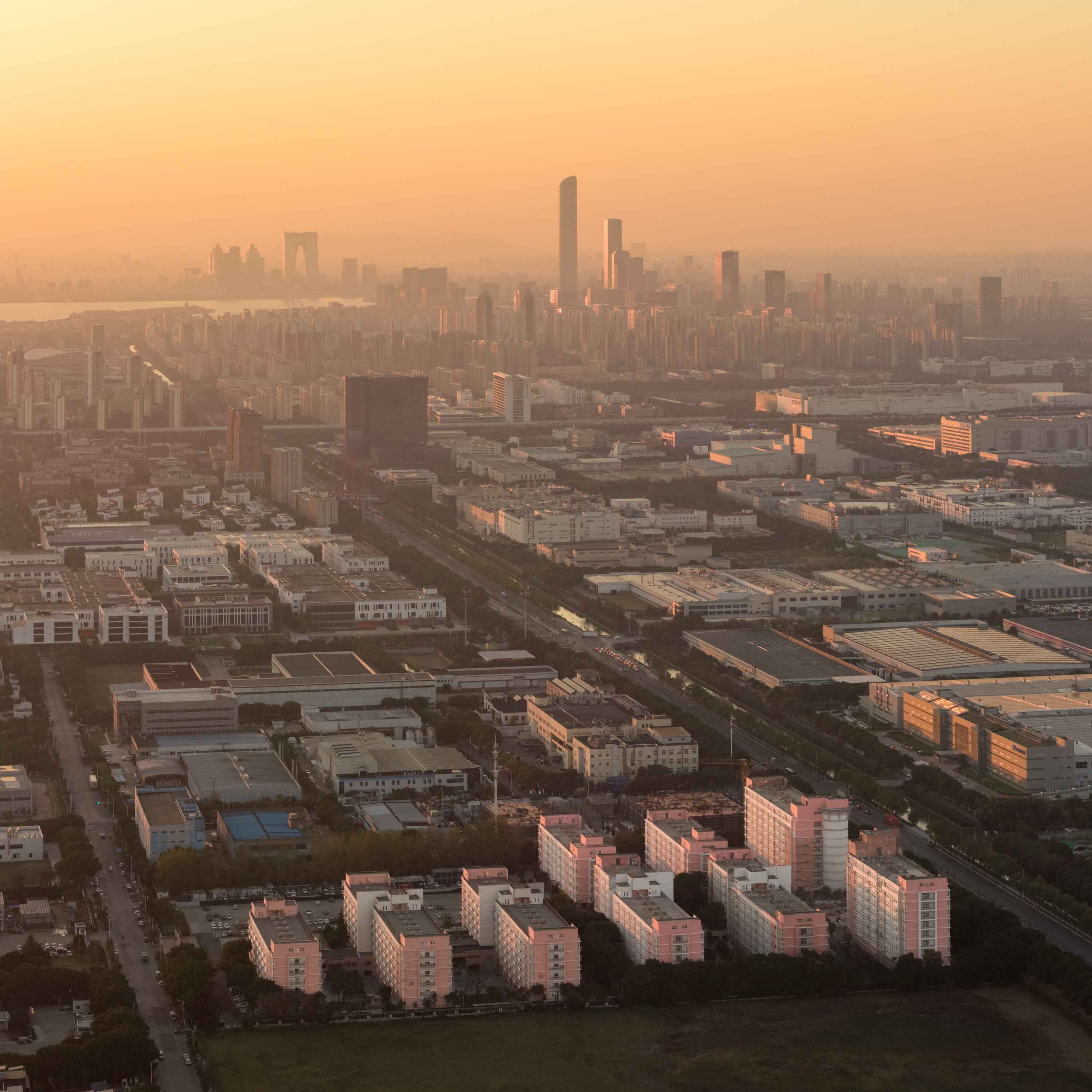
黄昏时刻的可胜可利工人宿舍区 ©陈曦工作室
Topo & Meeca Technology (SuZhou) Workers' Dormitory Area at Dusk
项目信息
项目名称:苏州可胜可利工人宿舍区修复与更新
项目地点:江苏省苏州市苏州工业园区
用地面积:约6.6万平方米
总建筑面积:约10.7万平方米
设计单位:weico建筑事务所(公共空间、景观、室内重新设计改造)
主持建筑师:孙伟
项目负责人:许嘉文
项目全过程团队(按姓氏拼音排序):
段芸、刘嫄、邱楚菲、孙晨、孙伟、许嘉文、赵岳、朱焕荣
业主单位:苏州工业园区城市重建有限公司
摄影版权:陈曦工作室
